
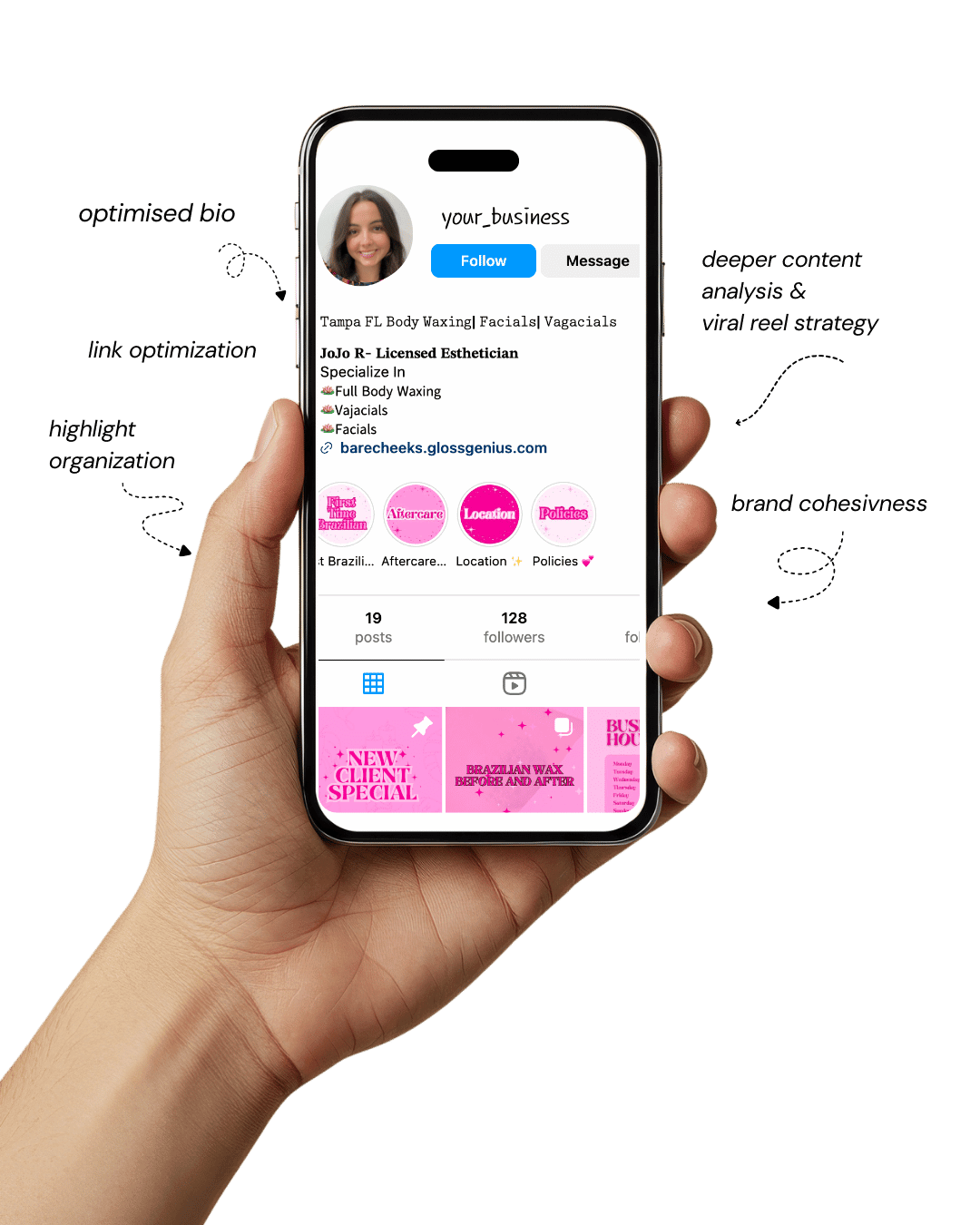
Your Instagram isn’t the problem.
The strategy is.
Get a free, honest audit of your Instagram profile — tailored for beauty, wellness & creative brands.
You’ll receive: profile fixes · content gaps · bio upgrades · content ideas.
I personally review your profile and send a clear, actionable breakdown — no AI, no templates.
Story ideas for coaches are one of the smartest shortcuts to building trust on social media, especially on Instagram Stories.
Within the first few seconds of opening your Stories, your audience subconsciously decides whether they find you credible, relatable, or just “another coach selling stuff.”
Stories help eliminate that friction by showing the real person behind the expertise—your voice, your process, your values, and your personality.
When coaches know how to structure Stories correctly, they can move someone from cold follower to warm lead without feeling salesy.
Most coaches struggle not because they lack content, but because they don’t know what content creates connection.
Posting random daily updates isn’t enough — you need strategic story ideas for coaches that make your audience watch until the end and respond.
The biggest mistake coaches make is treating Stories like a diary instead of a conversion tool.
Instagram’s algorithm tracks retention, link clicks, replies, profile visits, and time spent. When your Stories perform well, your posts and Reels get pushed too.
With the right story ideas for coaches, you increase engagement and build the “know-like-trust” factor faster than any other content format.
By the end of this article, you’ll have some actionable, plug-and-play story ideas for coaches that help you educate, connect, and convert — without feeling like you’re selling.
Why Stories Matter for Coaches (And How They Build Trust)

Stories disappear in 24 hours, but their impact on trust lasts much longer. When coaches use strategic story ideas for coaches, they create “micro emotional connections.”
Humans buy based on emotion first and logic second—and Stories allow followers to experience both.
Instagram Stories place you at the top of the app, which means people see them before feed posts. This puts your content in a prime position for visibility, especially when you want to nurture leads.
And because Stories show personality, they create a parasocial relationship — meaning your audience feels like they know you personally.
Another overlooked benefit? Stories let you collect data. When you use polls, sliders, question boxes, and CTAs, you don’t just entertain — you learn what your audience wants.
That means your story ideas for coaches don’t just build connection; they give you insights you can use for product development and messaging.
Stories also lower the psychological barrier to engagement. People may not comment on a post, but they will vote in a poll, tap a slider, or reply to a question.
In short, Stories are where connection is built, and your feed is where conversion happens. Using intentional story ideas for coaches makes that connection happen faster.
1. Share Your “Why” (The Human Backstory)
Your audience trusts your results, but they connect with your reason. Out of all the story ideas for coaches, sharing the story behind your “why” is the most emotionally powerful because it opens a window into who you are as a human being, not just a professional.
Instead of listing your certifications, awards, or achievements, walk your audience through what led you here.
Talk about the moments when things were not perfect — when you doubted yourself, when something didn’t go the way you expected, or when you hit a turning point that made you say, “Enough. This needs to change.”
People don’t trust coaches because of their accomplishments. They trust coaches because they can see themselves in their struggles.
When you share your origin story, explain what your life looked like before coaching, how you felt during that transition, and what finally pushed you to start helping others.
Your storytelling should feel like a conversation with a friend, where you are letting them in on something personal.
When you record this story in your Instagram Stories, speak directly into the camera. Try to film in a quiet space with natural light so that the video feels candid and not overly produced. Add subtitles, because most people watch Stories without sound.
End with a question sticker, giving your audience the opportunity to ask about your journey or share part of theirs.
Human connection converts more than strategy. Sharing your why is one of the strongest story ideas for coaches because it turns a stranger into someone who believes in you.
2. Show a Real Client Transformation (Screenshots + Context)
People trust proof, and this type of content is one of the highest-performing story ideas for coaches.
When you showcase client transformations, whether it’s through screenshots, voice notes, or a short video testimonial, you are demonstrating that what you teach doesn’t just sound good — it works.
But here’s where most coaches go wrong: they show the final result without explaining what steps the client actually took.
Your audience doesn’t just want to see the outcome; they’re curious about the journey and what went into making that result possible.
Instead of saying, “My client signed five new clients,” explain how you guided them. Maybe you helped them simplify their messaging, improve their content structure, or shift from passive posting to proactive outreach.
Walk your audience through what your client struggled with before working with you, the shifts that happened, and what the result felt like for them emotionally.
Technically, always blur out personal details from screenshots, remove usernames, and get explicit permission before sharing.
This not only protects privacy but shows professionalism and ethical conduct — qualities people subconsciously look for when choosing a coach.
End the story with an invitation to engage, encouraging viewers to message you if they want to see the exact steps you walk clients through. This makes the transformation more relatable and attainable.
3. Teach One Mini Lesson (Micro Value Wins)
Educational content positions you as a trusted expert, which is why it is one of the best story ideas for coaches.
Instead of overwhelming viewers with long explanations, share a short, digestible micro-lesson that someone can apply immediately.
Think of each story slide as a single paragraph instead of a full chapter. Choose one concept, break it into a problem, a mini framework, and a simple action step.
For example: rather than saying “You need a niche,” show the first step. Describe how choosing a niche isn’t about limiting yourself; it’s about becoming easily understood.
Then, teach an exercise your viewer can complete in less than sixty seconds, like identifying the one type of person they naturally help most.
While recording, speak slowly, look into the lens, and keep your background simple. This isn’t about production quality; it’s about clarity.
Using your branded colors in text or backgrounds creates consistency and builds visual recognition. People remember brands they see repeatedly in the same style.
Conclude by asking a direct question: “Was this helpful?” or “Want me to create more like this?” This encourages engagement, which increases story reach.
Teaching mini lessons proves your value publicly, so when you make an offer later, people already trust you know what you’re doing.
4. Your Daily Routine as a Coach (Lifestyle + Authority)
People are inherently curious. They want to see how you work and what your process looks like in real life. That curiosity makes daily routine content one of the easiest story ideas for coaches that builds trust without needing to “sell.”
By showing snapshots of your day — your morning setup, the tools you use to plan content, the way you organize client sessions, or how you approach personal development — viewers get a behind-the-scenes look at the real lifestyle of a coach.
When recording, don’t overthink it. Use quick clips of your laptop, your workspace, you preparing a client call, or organizing your planner. Add short captions to explain what you’re doing and why it helps.
For example, instead of simply showing your laptop, write something like “Planning client sessions for the week using my CRM — this helps keep everything streamlined.”
Another overlooked detail is tagging the tools you use. When you mention platforms like Notion, ClickUp, or Calendly, it shows structure. People associate structure with confidence and expertise.
End the Story by inviting your audience to engage with a simple question like, “Want the full checklist I use to run my coaching business daily?” This encourages interaction and opens the door to building deeper connections.
5. Myth vs. Fact (Pattern Interrupt)
Every industry has misconceptions, and busting myths is one of the most disruptive story ideas for coaches.
People love learning the truth behind something they once believed was correct, and debunking myths positions you as someone who sees beyond surface-level advice.
Share a common belief that your audience may currently struggle with, and follow it with a clear, practical fact that sets the record straight.
The brain processes contrasting information quickly, especially when it is bold, simple, and visually striking.
By presenting the myth on one slide and the fact on the next, you create a pattern interrupt that captures attention and invites the viewer to keep watching.
You can talk about myths related to success, motivation, coaching, content creation, niching down, or mindset.
Explain why the myth is wrong, and then go deeper into the logic behind the actual fact. For example, instead of simply saying, “You don’t need a big audience to make sales,” explain why messaging clarity and engagement matter more.
People appreciate when they feel informed and empowered, and they begin seeing you as the person who clears up confusion. When you can shift their beliefs, you become their trusted authority.
6. Ask a Question Using a Poll (Market Research Without Effort)
If you want your content and offers to hit exactly what your audience needs, this is one of the smartest story ideas for coaches.
Polls allow you to ask strategic questions, collect answers instantly, and better understand the challenges, desires, and preferences of your audience.
Asking questions using the poll sticker removes pressure from responding because people can just tap a button instead of typing a message.
Instead of posting a poll that asks something generic like “What do you want to see?”, ask specific questions: What they’re currently struggling with, what keeps them stuck, or which type of content would help them move forward.
When people vote or reply, they are giving you data you can use to improve your content strategy, refine your messaging, and even shape future offers.
This method helps you understand your audience more deeply. When followers answer a poll, they become part of a conversation, not just silent observers. People feel seen when their opinion is asked, and that emotional experience builds trust.
7. Behind the Scenes of Your Current Project
Sharing what you’re working on in real time makes your audience feel like they are inside your world.
This is why behind-the-scenes content is one of the most captivating story ideas for coaches. People love watching something unfold step by step.
Whether you’re planning a launch, outlining a new coaching module, creating content for a masterclass, or preparing onboarding materials for new clients, showing the process helps followers feel involved.
Include clips of your workspace, planning board, or your screen as you organize things. Add text that describes what you’re doing and why it matters.
When people see the amount of thought and planning that goes into your coaching, your expertise becomes more visible.
A simple but highly effective technical tip is adding timestamps to your Stories. This shows progress and demonstrates the effort that goes into your work.
Audiences value what they can see being built. When they see something from the ground up, they begin to feel invested — like they are watching the journey and rooting for your success.
8. Share Your Coaching Framework (Authority + Trust)
Most coaches talk about results, but very few explain how they help clients achieve those results — and that’s where sharing your coaching framework becomes one of the most authority-building story ideas for coaches.
A framework turns your expertise into something tangible. It shows that your process is intentional, structured, and repeatable.
Explain the different stages of your coaching method and what happens in each phase.
Instead of just telling people you “help them find clarity,” explain how your approach leads to clarity. Describe the transformation your clients go through.
This gives your coaching a “productized” feel. People understand exactly what they’re buying, reducing hesitation and making your offer feel more valuable.
When people see your framework, they don’t just trust the result — they trust the roadmap.
9. Mini Webinar in Stories
A mini webinar in Stories is like giving a keynote speech, but in a short, bite-sized format. It compresses value into a few slides and positions you as an expert in a matter of minutes.
That makes this one of the most strategic story ideas for coaches.
Start with a problem your audience is facing. Next, explain a simple framework or concept that solves the problem.
Then, end with a micro action step viewers can implement immediately. Make sure your teaching is focused and not overloaded with information.
When you offer value upfront, without asking for anything in return, you demonstrate generosity and confidence in your knowledge.
And when you invite them to DM a keyword to access the full version, it creates a warm lead without feeling pushy.
10. Share Your Opinions (Polarizing but Respectful)
Thought leadership isn’t about being loud or controversial. It’s about having a clear perspective.
Sharing your opinions is one of the boldest story ideas for coaches because it separates you from every other coach saying the same things.
Talk about what you believe in, what you disagree with, and what you wish more people understood. If everyone in your industry is saying the same thing, offer a different approach.
Explain why you don’t follow certain trends or why certain strategies didn’t align with your values.
When people agree with you, they feel aligned. When they don’t, your strong stance still makes you memorable. This attraction–repulsion dynamic builds a powerful personal brand.
The right people will see you and think, “Finally, someone who gets it.”
11. Share Your Mistakes / Lessons Learned (Relatability)
Sharing your mistakes makes you relatable and approachable. This is a meaningful story ideas for coaches because it shows your audience that progress is not linear.
When you speak openly about the missteps you made, you help your audience avoid making the same mistakes.
Describe a situation where you took the long route instead of the short one. Explain what you were thinking at that time, what you would change if you could go back, and what the experience taught you.
These stories are incredibly powerful because they show vulnerability and growth.
12. Soft CTA to Work With You (Value First, Offer Second)
After giving value, proving expertise, and building connection, it becomes natural to invite people to work with you.
This final technique is one of the most profitable story ideas for coaches because it guides people into taking action without pressure.
Talk about your offer in a conversational tone. Tell viewers who your offer is designed for and what problem it solves. Use clear language and avoid overexplaining.
People don’t care about features — they care about how their life or business will improve.
A soft CTA feels like an invitation rather than a pitch.
Additional Steps to Maximize Results

Once you start using these story ideas for coaches, amplify results using these advanced strategies:
Post Stories consistently (minimum: 5–10 slides per day).
Instagram rewards consistency and retention.
Use interactive stickers daily.
Polls ↑ engagement
Question boxes ↑ replies
Sliders ↑ watch time
Track retention rate per slide.
Benchmarks:
80% retention = excellent
60–70% = fine
Below 50% = too long or irrelevant
Add a CTA every 3–5 slides.
This increases conversation and lead flow.
Save high-performing Stories to Highlights under categories like:
Results
Value
About Me
Offers
Organized Highlights = a mini sales page.
By consistently repeating story ideas for coaches and pairing them with these technical steps, you create a content ecosystem that warms leads daily — so selling becomes easy.
Final Words
Trust isn’t built by posting more — it’s built by posting intentionally. When you use strategic story ideas for coaches, every Story becomes a touchpoint that nurtures your audience.
Instead of wondering what to post or worrying about “bugging people,” you’ll start showing up with clarity, confidence, and authority.
Stories are where relationships are formed. Feeds are where transactions happen.
Use these ideas, pair them with interactive elements, and show up consistently.