
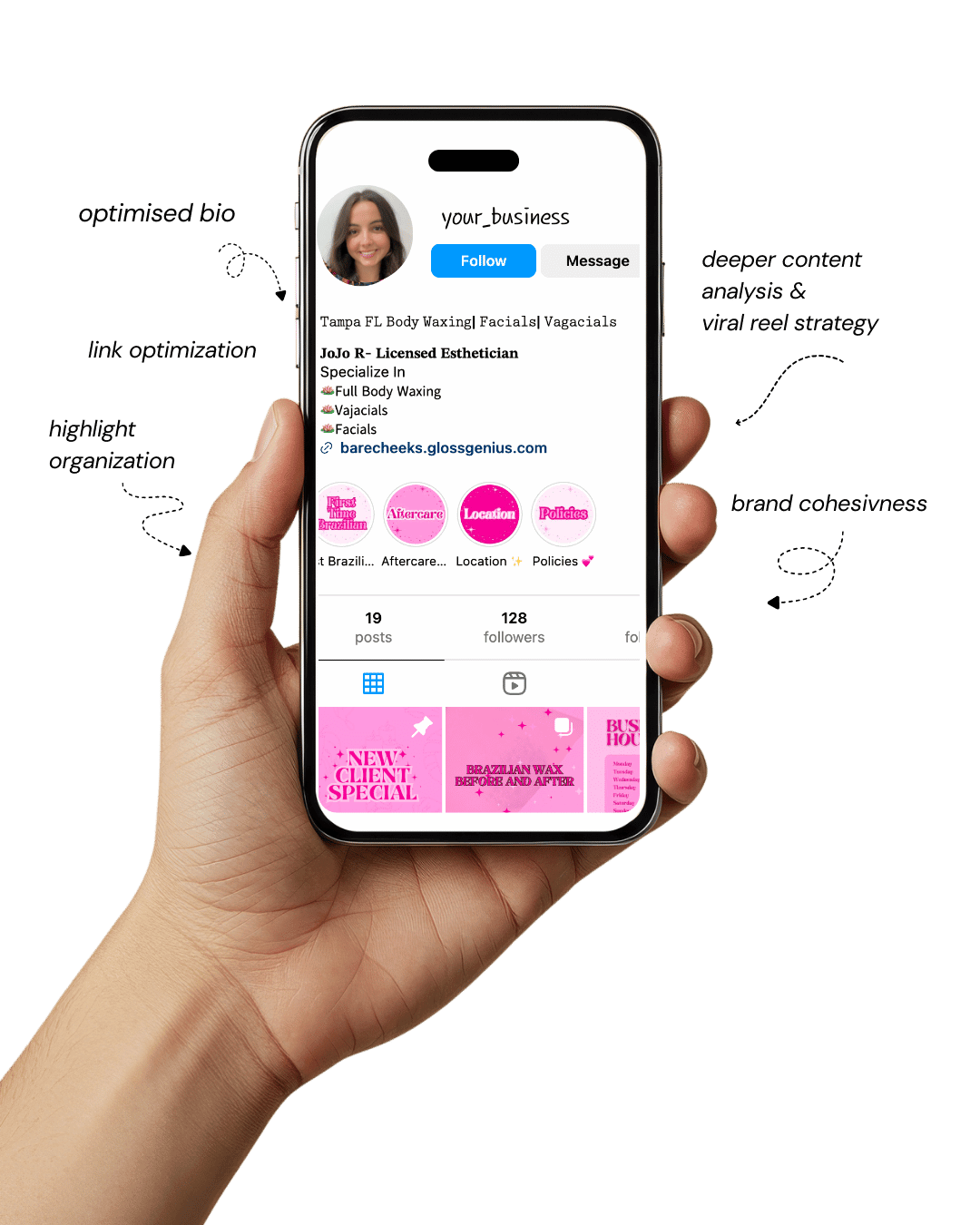
Your Instagram isn’t the problem.
The strategy is.
Get a free, honest audit of your Instagram profile — tailored for beauty, wellness & creative brands.
You’ll receive: profile fixes · content gaps · bio upgrades · content ideas.
I personally review your profile and send a clear, actionable breakdown — no AI, no templates.
Health Coaching has shifted dramatically in 2025. Posting inspirational quotes and “what I eat in a day” videos isn’t enough anymore — clients want education, authority, and proof.
With increasing competition in the wellness space, people are no longer impressed by generic content.
They want to learn from someone who appears knowledgeable, trustworthy, and experienced. This is where strategic marketing comes in.
When done correctly, Health Coaching marketing turns strangers into leads, leads into conversations, and conversations into paying clients.
Most coaches are passionate about helping people but struggle with visibility. They post consistently yet attract no leads.
They wait for referrals but don’t actively build their pipeline. Marketing isn’t about spamming people — it’s about leading them through trust-based touchpoints.
When you position yourself as the authority, clients don’t price-shop. They simply ask when they can start.
The 20 ideas below are designed specifically for Health Coaching success in 2025. They focus on credibility-building strategies like speaking, hosting workshops, developing partnerships, and showcasing proof.
When you implement these consistently, your marketing works even when you’re offline. Your audience begins seeing you not just as a coach — but as the go-to expert in Health Coaching.
Why These Marketing Strategies Work

The reason these strategies work is because marketing for Health Coaching is not transactional—it’s relational.
Unlike selling a physical product, you’re selling transformation, trust, and expertise. People must feel confident that you understand their struggles and can guide them.
They have to believe the solution will work for them personally. That requires much more than tips and motivational quotes. It requires storytelling, authority, and demonstrating results.
When people see you teaching, speaking, hosting workshops, or being interviewed on a podcast, your perceived authority skyrockets.
Prospects subconsciously think, “If that podcast invited her to speak about Health Coaching, she must know what she’s doing.” Authority shortens the buying decision. Competence attracts clients, but authority closes sales.
These strategies also work because they create multiple touchpoints. A lead may first hear your name in a workshop, then see your posts online, then finally message you after downloading your lead magnet.
Your role is to show up consistently at these touchpoints so people know you are reliable, capable, and articulate. When your marketing carries authority, you never chase clients — they come toward you.
1. “What I Eat in a Day (Realistic, Busy Version)”
Showing realistic meals is one of the most effective marketing strategies in Health Coaching because it breaks the belief that healthy eating requires perfection. People don’t want to watch highly curated meals arranged on marble countertops.
They want to see simple choices made in the middle of a busy day. When you film this type of content, show how you choose meals that balance protein, fiber, and healthy fats without spending hours cooking.
Talk through why the choices matter for energy, cravings, and digestion. Include small mindset shifts like choosing a protein-rich breakfast even when you’re rushed, or prepping ingredients the night before to avoid skipping meals.
Fast pacing keeps attention. Instead of filming aesthetic shots, focus on realistic setups like eating in the car, grabbing a quick wrap between meetings, or assembling a snack plate instead of a full meal.
When people watch this, they see how Health Coaching fits into their real life, not an imagined perfect day.
2. “Three Habits That Changed My Energy Levels Forever”
This content works in Health Coaching because people want quick, simple habits that create noticeable improvements.
Share habits like drinking a full glass of water first thing in the morning, prioritizing protein at breakfast to control hunger later in the day, and walking for ten minutes after meals to stabilize blood sugar.
Instead of presenting the habits as rules, share your personal story of struggling with low energy, depending on caffeine, and feeling frustrated about not knowing why your energy crashed around midday.
When you show viewers how these habits changed your daily routine, you position yourself as relatable rather than preachy. Add captions manually so viewers who watch on silent still understand the message.
Close with a gentle call to action encouraging viewers to save the video so they can try the habits the next morning. This positions your Health Coaching content as practical support, not just information.
3. “The Grocery Cart Template (Copy This)”
Most people know they need to eat healthier, but they don’t know what to buy. This is where your Health Coaching expertise becomes incredibly valuable. Instead of overwhelming your audience with complicated ingredient lists, show them a simple grocery cart framework.
Walk through how you divide your cart into categories such as proteins, produce, healthy fats, and minimal-prep items.
Explain that having a structure reduces decision fatigue and prevents impulse purchases that derail healthy habits. Film as you shop, narrating how you choose items that simplify weekly meals.
As viewers watch you confidently fill your cart with intentional choices, they begin imagining themselves doing the same.
The power of this content is that it turns something stressful into something achievable, giving people an immediate win and positioning your Health Coaching guidance as the missing structure they’ve needed.
4. Before/After Mindset Reframe
Instead of body transformation photos, which can trigger shame, focus on mental transformation. Share a before example such as constantly restarting every Monday and feeling guilty about food choices.
Then show the after perspective of choosing progress over perfection, understanding hunger signals, or eating without anxiety. Use storytelling and emotional connection.
People invest in Health Coaching not because they want a perfect body but because they want peace.
When you demonstrate internal shifts like confidence, self-trust, reduced stress around food, and emotional freedom, viewers realize transformation is possible without punishment. When people see themselves in your before mindset, they reach out for support.
5. Demo a Five-Minute Habit Stack
Habit stacking shows how to build routines without effort. Explain how you attach a new healthy action to an existing habit, like drinking water and taking supplements as soon as you start the coffee maker.
Demonstrate this visually and narrate your thought process while doing it. People struggle not because they lack motivation, but because they lack systems.
When they see how small habits can be layered together to form a routine that sticks, they start believing that change doesn’t require discipline, only structure.
Show how Health Coaching gives them systems that support consistency, eliminating the stress of trying to remember everything.
6. “Stop Doing This If You Want More Energy”
Contrarian content gets attention. Use this reel or pin to highlight things that drain energy, such as skipping breakfast, relying on caffeine instead of nutrients, or eating sugary snacks that cause rapid crashes.
Explain how eating patterns affect hormones, blood sugar, and mood. Share simple shifts such as adding protein or spacing meals evenly throughout the day.
When you call out common mistakes, viewers feel seen, which increases engagement and comments.
By pointing out the root causes, you position Health Coaching as the solution that helps them break the cycle and build energy that lasts.
7. “Healthy Snack Pairings That Actually Keep You Full”
Most people snack reactively, grabbing whatever is convenient. Show them how to snack intentionally by combining carbs with protein and fat.
Instead of just filming food, explain the reasoning behind it. Tell them that protein stabilizes blood sugar, fat slows digestion, and carbs give quick energy.
By understanding the science, they make informed decisions. Health Coaching becomes the guide that teaches them not just what to eat, but why.
Visual examples make the content memorable, and showing realistic portions builds credibility. People save posts that simplify their decision-making, which increases your reach and authority.
8. Your “Why” Story
People don’t buy coaching. They buy the person guiding the coaching. Share your authentic story about how you once struggled with dieting, burnout, confusion, or emotional eating.
Explain what pushed you to pursue Health Coaching and what changed once you discovered a more balanced approach. Vulnerability builds trust.
When your audience hears what motivated you to change, they believe you can help them change too.
Instead of telling them you understand, show them by revealing what your life used to look like and how you got to where you are today. Your story becomes the proof.
9. “Three Signs You’re Under-Eating (Not Over-Eating)”
Many people assume they are overeating when the real issue is under-eating. Use this post to explain how not eating enough leads to fatigue, intense cravings, stalled fat loss, and binge eating later.
Break down the physiology behind how the body responds to low intake and how protein timing affects blood sugar.
When people realize that eating more strategically could normalize their hunger, their relationship with food begins to heal. This post positions your Health Coaching as science-based, not restrictive.
10. Client Story Without Photos
Client success stories convert better when told through narrative. Share a client journey from exhaustion and confusion to confidence and consistency.
Walk through what changed: weekly check-ins, personalized meal templates, emotional support, and breakthroughs in mindset. You don’t need photos when the transformation is internal.
Use anonymous screenshots of check-ins or feedback messages to add proof while maintaining privacy.
These stories help people imagine themselves succeeding with your Health Coaching program. When they can visualize their outcome, they reach out.
11. Myth-Busting Carousel or Idea Pin
There is a lot of outdated information in the wellness space. Use this content to call out myths like cutting carbs at night or thinking cardio is required for fat loss.
Explain what actually works, and use evidence without overwhelming your viewers.
Myth busting positions your Health Coaching as research-based and trustworthy.
When you take a strong stance against misinformation, people stop scrolling because you’re saying something different from everyone else. Authority builds desire to learn more.
12. Meal Prep Without Bulk Cooking
Instead of traditional meal prep, which overwhelms people, show them a flexible approach. Cook ingredients separately — protein, carb, and vegetables — then assemble different meals throughout the week.
Explain that this reduces boredom and saves time. Show how fifteen minutes of organization on Sunday night makes the rest of the week easier.
When viewers see the system, not just the food, they understand the real value of Health Coaching: simplifying their life, reducing stress, and making healthy eating automatic.
13. Your Non-Negotiables
Share three or four personal standards that require no motivation, such as ten thousand steps, daily hydration, or eating meals seated without screens.
Non-negotiables show discipline in a relatable way. They communicate that success is not about being perfect but being consistent.
When viewers see that your Health Coaching method prioritizes sustainable routines instead of strict rules, they feel like they can finally succeed without feeling overwhelmed.
14. “Dupe This Smoothie or Coffee Order”
People love copy-and-paste solutions. Choose a popular drink like a high-sugar coffee shop latte and recreate it with more protein and less sugar. Explain each adjustment and why it matters.
Use simple language: more protein means longer energy, less sugar means fewer crashes. This content works because it blends practicality with novelty.
Your audience learns small tweaks they can start using immediately, which positions your Health Coaching as helpful and accessible rather than restrictive.
15. A Motivational Pep Talk
Look directly into the camera and speak to viewers with empathy. Remind them that consistency matters more than perfection and that a bad day doesn’t erase all progress.
Encourage them to take one small action today that moves them closer to feeling better.
Motivation alone doesn’t change someone’s life, but when combined with accountability and structure through Health Coaching, it leads to lasting transformation.
Emotional content builds connection and creates the trust that leads someone to message you and ask how to get started.
How to Increase Results From These Strategies

To maximize these strategies, consistency is more important than volume. Choose three, become excellent at them, and repeat.
Every action should lead viewers back to one destination — a free call or a lead magnet.
Track your metrics weekly so you’re not “just posting.” Review engagement, inquiries, and conversion from your Health Coaching outreach.
Final Words
Marketing doesn’t have to feel complicated or overwhelming. The biggest shift happens when you stop trying to convince people to work with you and start demonstrating your value instead.
When you show up with authority, clarity, and consistency, clients recognize your expertise and naturally want to be part of your world.
These strategies are completely doable — even if you’re starting from zero.
Choose three, apply them weekly, and track your results. Clients don’t hire the coach who posts the most. They hire the coach who leads confidently.