
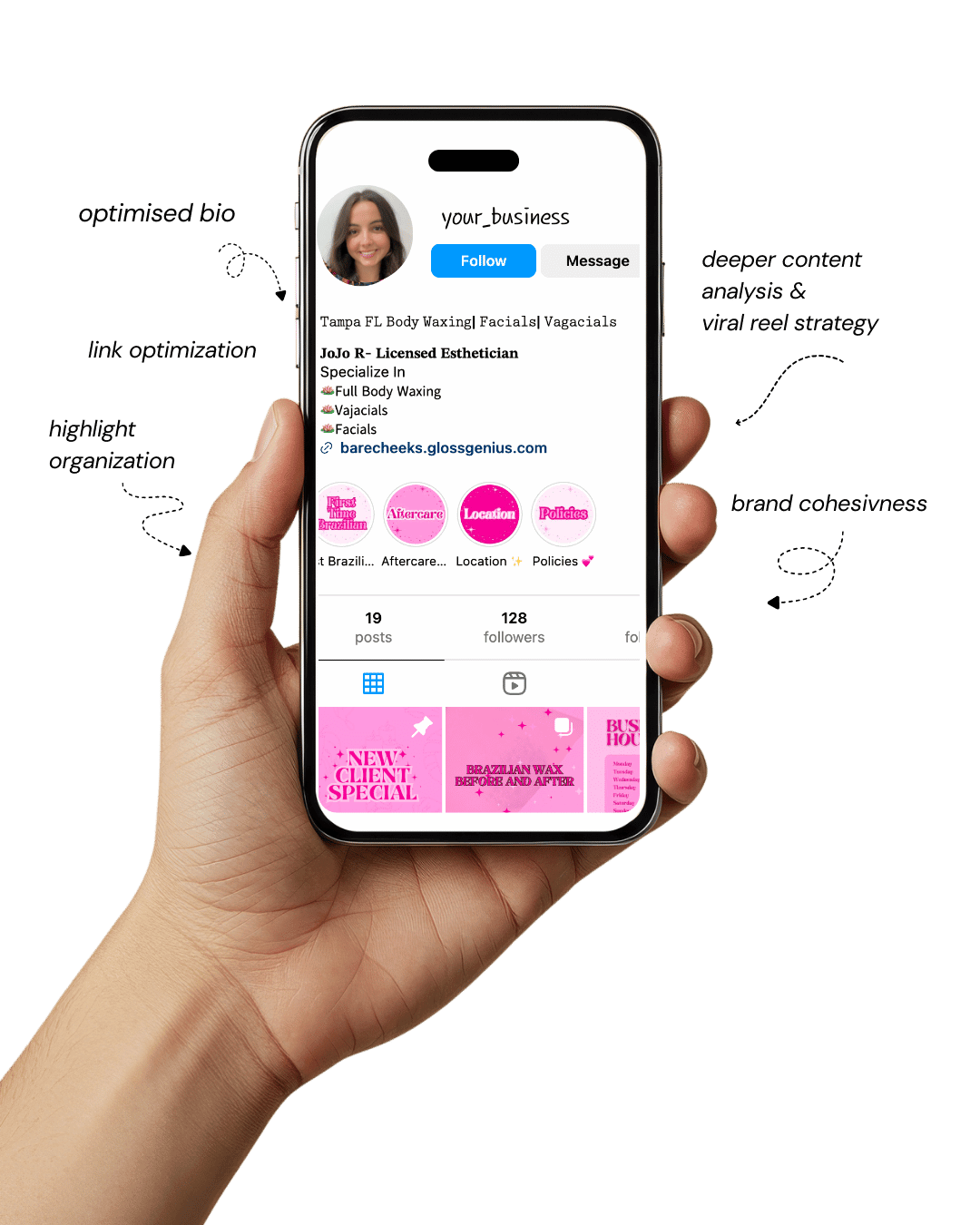
Your Instagram isn’t the problem.
The strategy is.
Get a free, honest audit of your Instagram profile — tailored for beauty, wellness & creative brands.
You’ll receive: profile fixes · content gaps · bio upgrades · content ideas.
I personally review your profile and send a clear, actionable breakdown — no AI, no templates.
If you’re building a business in wellness coaching, you already know how important it is to create content that truly resonates with the people you want to support.
In a space filled with tips, tools, and transformation promises, what sets you apart is how clearly and confidently you communicate your message.
Short-form content — especially reels and pins — has become one of the most effective ways to reach new clients because it blends education, personality, and emotional connection in seconds.
Whether you’re a mindset coach, holistic practitioner, fitness guide, or spiritual mentor, your visuals carry the power to either pull people in or disappear into the sea of lookalikes.
Once you understand what your dream clients respond to, these ideas become even more impactful.
People who seek wellness coaching often look for grounding, inspiration, and clarity, and your content can deliver that before they ever meet you.
Visuals help potential clients feel your presence, voice, and vibe, long before algorithms catch up.
The right mix of educational, relatable, and transformation-focused concepts can turn passive scrollers into aligned followers.
And when you execute your content intentionally, reels and pins become a doorway — inviting your dream clients to trust you, engage with you, and eventually work with you.
Why These Ideas Matter for Wellness Coaches

Before diving into the list, it helps to understand why these reels and pins work so well for wellness coaching brands.
People who seek support in wellness aren’t just looking for information — they’re looking for guidance that feels safe, grounded, and aspirational.
When your content reflects clarity, confidence, and depth, your audience naturally feels drawn to you.
Reels and pins offer the perfect mix of speed and substance, allowing you to visually express your philosophy, process, and energy in a way that text alone can’t.
Many coaches rely only on inspirational quotes or client testimonials, but that creates content that blends into everyone else’s feed.
What actually helps your message land is showing your perspective in a way that feels human and specific.
Good wellness coaching content demonstrates your approach in small, digestible moments. It shows what it’s like to work with you without needing to say it outright.
When used well, reels and pins also serve as evergreen marketing tools. Pinterest pushes your content for months, sometimes years, while reels help you build trust quickly through visual storytelling.
These ideas were created to help wellness coaching businesses communicate with clarity, stand out from the saturation, and position themselves as leaders in a growing market.
1. Your “Core Method” in 10 Seconds
One of the most effective concepts for anyone in wellness coaching is a short-form breakdown of your core method.
Instead of explaining your entire framework, focus on the three or four steps clients go through when working with you.
Show each step visually — through clips of your workspace, journal pages, calming environments, or gentle movements.
People often assume reels must be fast-paced, but slower, intentional transitions actually perform well in the wellness space because they create a grounded feeling.
Many coaches forget to visually show their process, which means clients have no context for what the journey looks like. A simple sequence like “Release. Recenter. Rebuild.” or “Awareness → Alignment → Action” instantly communicates structure and reliability.
This type of content also helps potential clients self-identify whether your approach feels right for them. It’s one of the most approachable formats to create yet carries a strong sense of professionalism and clarity.
2. A Before-and-After Mindset Shift
This type of reel or pin works extremely well for wellness coaching because it shows transformation without relying on physical before-and-after images.
Choose a common belief your clients struggle with and illustrate how their mindset changes after applying your teachings.
For example, the shift from “I need to do everything perfectly” to “I can move forward one small step at a time.” Present the contrast visually with calm clips, handwriting overlays, or environment changes.
Mindset-based before-and-afters are powerful because they highlight the internal growth your coaching supports — something that many people don’t realize is the foundation of lasting transformation.
This content also demonstrates your voice and perspective, which helps potential clients feel connected to your philosophy.
When you pair a relatable belief with a grounded shift, people stop scrolling because they see themselves in the content.
This idea is simple to create but has a strong emotional and educational pull.
3. A “Day in the Life” of Your Healthiest Self
This reel or pin shows your audience what living your message looks like. In wellness coaching, people want to see your lifestyle — not because it needs to be perfect, but because it reflects your values.
Share moments like your morning routine, your work setup, the grounding practices you use, or snippets of mindful movement.
Keep the clips gentle and realistic rather than overly aesthetic; authentic content performs best in this niche.
One element people often overlook is showing the small decisions that shape your day — like taking a breath before opening your laptop, choosing a nourishing snack, or stepping outside between sessions. These micro-moments create a sense of relatability and trust.
When viewers see how you embody your teachings, it reinforces your credibility without needing to say a word.
This idea helps your audience imagine themselves living similarly with your support, turning casual viewers into aligned clients.
4. A Pin or Reel Highlighting One Signature Framework
Every coach benefits from having one signature framework, and showcasing it visually is one of the most compelling concepts for wellness coaching content.
This might be your “3-step stress reset,” your “emotional grounding cycle,” or your “aligned habits system.” Present the structure in a clean, simple layout with calm video clips or diagrams.
Many coaches hesitate to share their frameworks because they fear giving too much away.
In reality, showing the outline builds trust and helps potential clients understand that your coaching is structured, reliable, and results-oriented. It also positions you as someone with a clear methodology rather than a collection of random tips.
Pinterest especially favors visually organized educational content, making this idea ideal for long-term discoverability.
When done well, your framework becomes something viewers recognize, repeat, and start to associate with your brand identity.
5. “If You Feel This… Try This” Simple Solutions
This style of content works beautifully for wellness coaching because it bridges the gap between awareness and action.
Choose a common emotional or physical sign your clients experience — overwhelm, tension, procrastination, restlessness — and offer one small, doable shift. Keep the recommendation gentle and supportive, rather than prescriptive.
What makes this concept resonate is that people often don’t know how to take the first step toward feeling better.
When you show them a solution that feels simple and realistic, it creates an immediate sense of relief and trust. Clips of hands, breathwork, nature, or calm spaces pair well with this type of message.
This idea also positions you as a guide who understands how people feel on a daily basis, not just in theoretical coaching sessions.
The more relevant your examples are, the more clients will feel like you truly speak to their lived experience.
6. “Signs You’re Growing Even If It Doesn’t Feel Like It”
This is one of the most saved and shared content formats in wellness coaching because it validates the subtle progress people often overlook.
Growth isn’t always dramatic, and many clients doubt themselves when progress feels slow.
Listing small changes — like recovering faster from stress, speaking up once more than usual, or noticing patterns instead of reacting — helps your audience recognize their own evolution.
This idea builds trust because it shows that you understand the complexity of personal development.
People feel seen when you highlight progress markers that are rarely discussed but deeply relatable.
The content becomes emotionally grounding, and viewers start associating your brand with reassurance and self-awareness.
In visual terms, pair slow, calming clips with gentle transitions so the pacing matches the message. This idea works well as both a reel and a pin, and it often becomes evergreen content on Pinterest.
7. A “Mini Workshop” in 10–15 Seconds
Condensed educational content performs extremely well in wellness coaching because it’s both informative and digestible.
Choose a micro-topic — like resetting your nervous system, reframing overthinking, or establishing a grounding routine — and break it into three quick steps. Present the information visually through text overlays, slides, or simple studio clips.
People are more likely to save content when it feels like a short workshop they can revisit. It gives potential clients a taste of your teaching style and shows you know how to communicate complex ideas clearly.
This is especially important in coaching because clarity is often the reason someone chooses one coach over another.
To ensure it still feels calming rather than overwhelming, keep the visuals minimal and the pacing slow.
High-value micro-lessons help build trust and nurture your audience long before they reach out for support.
8. “What I Wish More People Knew About Healing / Growth”
This type of reel or pin resonates strongly with audiences seeking wellness coaching because it addresses misconceptions that often lead to frustration.
Share truths like healing not being linear, growth requiring discomfort, or habits needing emotional support — not just discipline. This style positions you as someone who understands the deeper layers of wellness work.
Viewers often save, share, and revisit content that feels honest and clarifying.
It makes people feel less alone, and it demonstrates your depth of understanding without needing to sound overly academic. The key is delivering these insights in a grounded, compassionate tone.
Use gentle visuals and avoid overwhelming graphics. The more spacious and calm the design feels, the more your message will land.
When people feel understood on a deeper level, they naturally grow more curious about working with you.
9. The “Quiet Transformation” Concept
Not every transformation is dramatic — many are subtle, internal, and easy to miss. This theme fits perfectly with wellness coaching because it showcases progress that happens behind the scenes.
Highlight shifts like setting one boundary, choosing rest without guilt, or recognizing emotional triggers earlier than before.
This content resonates with people who feel like they’re growing slowly or invisibly. When you name these quiet transformations, you give your audience a language for what they’re experiencing.
This helps them feel supported and validated, which increases trust.
Visually, keep the tone gentle — nature scenes, soft lighting, or simple household moments work beautifully.
This type of content positions your coaching as something that honors the subtle parts of the healing journey rather than only focusing on results.
10. “A Gentle Reminder” Series
Gentle reminders are a staple in wellness coaching because they offer supportive, low-pressure encouragement.
Choose themes your audience needs to hear most — rest is productive, small steps count, consistency doesn’t mean perfection, or slowing down is a form of strength. Keep the message intentionally simple so viewers absorb it quickly.
What makes this content effective is that reminders tap into the emotional core of wellness. They create a moment of grounding in someone’s day and help people feel cared for.
When reminders align with what your clients usually struggle with, they become touchpoints that strengthen trust.
Use soft visuals that reflect the tone of the reminder—hands, writing, calm spaces, or nature moments.
This category tends to perform well on both Pinterest and Instagram because of its simplicity, emotional resonance, and universal relevance.
11. “One Question to Shift Your Day”
Questions are powerful tools in wellness coaching because they guide people toward self-awareness instead of giving them rigid instructions.
Create a reel or pin that presents a single grounding question — something like “What do I need more of today?” or “Where am I holding tension right now?” These simple prompts help your audience pause and check in with themselves.
What makes this type of content attract dream clients is that it mirrors the coaching experience in a small, accessible format.
People get a taste of how you help them think differently, rather than simply what you can teach.
It subtly positions you as someone who leads with curiosity rather than pressure—a trait many clients value deeply in the wellness space.
Pair the question with gentle, open visuals. The simplicity and clarity of the message enhance its impact and create content that feels calm, spacious, and actionable.
12. “What I’m Currently Learning as a Coach”
Sharing what you’re learning creates a sense of authenticity and relatability in wellness coaching.
Instead of positioning yourself as someone with all the answers, this idea shows your audience that you’re also growing, reflecting, and evolving.
Choose one recent insight — something honest and grounded — and present it in a way that feels conversational.
This type of reel or pin builds trust because it demonstrates humility and transparency. Many coaches mistakenly avoid sharing their learning journey, assuming it will undermine their authority.
In reality, it strengthens connection because clients appreciate coaches who model the same self-awareness they encourage in others.
Keep the visuals simple and warm, and avoid making the message overly polished. When your audience senses sincerity, the content invites them into your world in a meaningful, human way.
13. “A Simple Ritual to Support Your Nervous System”
Nervous system regulation is a core theme in wellness coaching, yet many people don’t realize how small rituals can create noticeable shifts.
This content idea highlights one supportive practice — like grounding breaths, slow stretching, or a sensory-focused pause — and presents it step-by-step with calm pacing.
People often feel overwhelmed by healing content that requires major lifestyle changes.
Sharing something that takes less than a minute to implement makes your guidance feel accessible and doable.
This fosters trust and encourages your audience to experiment with your teachings.
You can film hands, nature clips, or minimal movement shots to create a soothing visual experience. This content becomes highly shareable because it offers a gentle solution that feels achievable even on difficult days.
14. “What Burnout Really Looks Like”
Burnout is a common reason people seek wellness coaching, but most content only highlights the dramatic symptoms.
This idea focuses on subtle, everyday signs that people often miss — like feeling numb instead of overwhelmed, losing interest in things that once brought joy, or experiencing mental fatigue even after rest.
This type of content resonates deeply because it helps your audience recognize their own patterns.
When people feel seen and understood, they’re more likely to engage with your work and consider coaching as a supportive step.
It also positions you as someone who can articulate emotional experiences clearly, a quality potential clients value.
Use grounded visuals with slower pacing. The message will land best when the video feels calm rather than overstimulating.
This kind of content often generates saves and shares because it validates experiences people don’t always know how to name.
15. “Try This When You Don’t Know What to Do Next”
Uncertainty is a universal struggle, which is why this concept works beautifully for wellness coaching.
Offer a grounding step for moments of confusion — like checking in with physical cues, writing down what’s occupying mental space, or identifying the smallest doable action. Keeping the advice simple ensures viewers don’t feel overwhelmed.
This type of content helps people shift from paralysis to clarity, which mirrors the support they seek from coaching.
It’s actionable, comforting, and direction-oriented, making it an easy piece for people to save and revisit.
Pair the message with minimalistic visuals — hands, writing, still spaces — to keep the tone supportive.
This format helps you appear both approachable and knowledgeable, strengthening your connection with your audience.
16. “How to Hold Space for Yourself”
Holding space is a foundational concept in wellness coaching, but many people don’t know what it actually looks like in practice.
Use this reel or pin to outline a simple version — pausing before reacting, naming emotions without judgment, or allowing discomfort to exist without immediately trying to fix it.
This content resonates because it addresses something deeply needed but rarely explained in a grounded, relatable way.
When viewers understand what holding space feels like, they become curious about working with someone who can support that process.
Gentle visuals and minimal editing help the message breathe. This idea helps position you as a coach who values emotional depth and self-compassion, both of which attract clients seeking a safe space for growth.
17. “The Truth About Consistency”
Consistency is one of the most misunderstood topics in wellness coaching, especially for people who have historically struggled to build habits.
This idea reframes consistency as a flexible, adaptive process rather than rigid perfection.
Highlight concepts like micro-habits, emotional support for routines, and permission to adjust without giving up.
Clients often blame themselves for inconsistency, so content that reframes the narrative feels comforting and empowering.
When your audience feels relief from self-judgment, they associate your brand with grounded guidance.
Use visuals that feel calm and steady — slow motion clips, hands, writing, or nature moments.
This idea attracts aligned clients because it demonstrates your nuanced understanding of behavior change.
18. “Why Your Progress Feels Slow”
Many people reach out to wellness coaching because they feel stuck, stagnant, or frustrated with their pace of growth.
This content breaks down the hidden reasons behind slow progress—like emotional exhaustion, nervous system overload, unrealistic expectations, or lack of gentle structure.
This idea is effective because it turns confusion into clarity. When your audience understands the roots of their experience, they feel more empowered. It also positions you as someone who sees beyond surface-level symptoms.
Pair this message with grounded imagery and spacious pacing. This concept often leads to comments and shares because people finally feel like someone understands what they haven’t been able to articulate.
19. “Habits That Support Your Future Self”
This content centers on identity-based habits, which is a powerful concept within wellness coaching.
Instead of focusing on tasks, focus on behaviors that strengthen self-trust — like checking in with your energy each morning, setting gentle boundaries, or ending the day with a moment of reflection.
People connect deeply with this approach because it shifts the focus from productivity to alignment.
It emphasizes that habits are about becoming, not performing. This perspective resonates strongly with clients seeking holistic, sustainable change.
Use soothing visuals that reflect the message. This type of content often gets saved by viewers building their own wellness routines, making it evergreen and shareable.
20. “What Working With Me Actually Looks Like”
This idea helps your audience experience your wellness coaching style before committing.
Show elements of your sessions without revealing private details — clips of your workspace, how you prepare, the tools you use, or the atmosphere you create. Describe your approach in simple, comforting terms.
Many people hesitate to reach out because they don’t know what coaching really involves. This content removes that uncertainty and helps them feel more confident taking the next step.
It also distinguishes your process from other coaches and clarifies what makes your work unique.
Gentle, comforting visuals reinforce the safety and clarity people look for when choosing a wellness coach.
This idea often converts curious viewers into clients because it removes guesswork and builds familiarity.
Additional Steps to Maximize Your Results

Once you begin sharing these ideas consistently, you can deepen your impact with a few additional steps that support your wellness coaching brand.
Start by developing visual consistency across your reels and pins — similar color tones, pacing, lighting, or editing choices.
This creates a recognizable aesthetic that helps viewers remember your content even before reading the text.
Consider organizing your ideas into recurring content themes so your audience knows what to expect from you.
When people can anticipate your content style, they engage more consistently. It also helps you maintain a steady posting rhythm without feeling overwhelmed.
Engagement also increases when you write captions that feel warm, grounded, and conversational. Your clients want to feel invited into the experience rather than pressured.
Adding thoughtful context beneath your visuals strengthens emotional connection and gives your audience more clarity about your philosophy.
Finally, keep your content aligned with the real transformation you offer. The closer your visuals match the internal shifts clients experience, the easier it becomes for viewers to see themselves supported by you.
When your messaging and visuals work together, your content becomes a seamless extension of your coaching practice.
Final Words
Creating reels and pins is one of the most powerful ways to reach aligned clients in the wellness coaching space.
These ideas help you show your depth, your presence, and your philosophy in a format that feels accessible and inviting.
When you create content that reflects your grounded approach, your audience senses the clarity and intention behind your work.
The more consistently you show up, the more your brand becomes a source of calm, insight, and support.
People begin to trust your voice, save your content, and naturally grow curious about what it would feel like to work with you.
These ideas aren’t meant to add pressure — they’re meant to simplify your creative process and help you share your value with ease.
When your content reflects who you truly are as a coach, it becomes a natural magnet for the clients you’re meant to serve.