
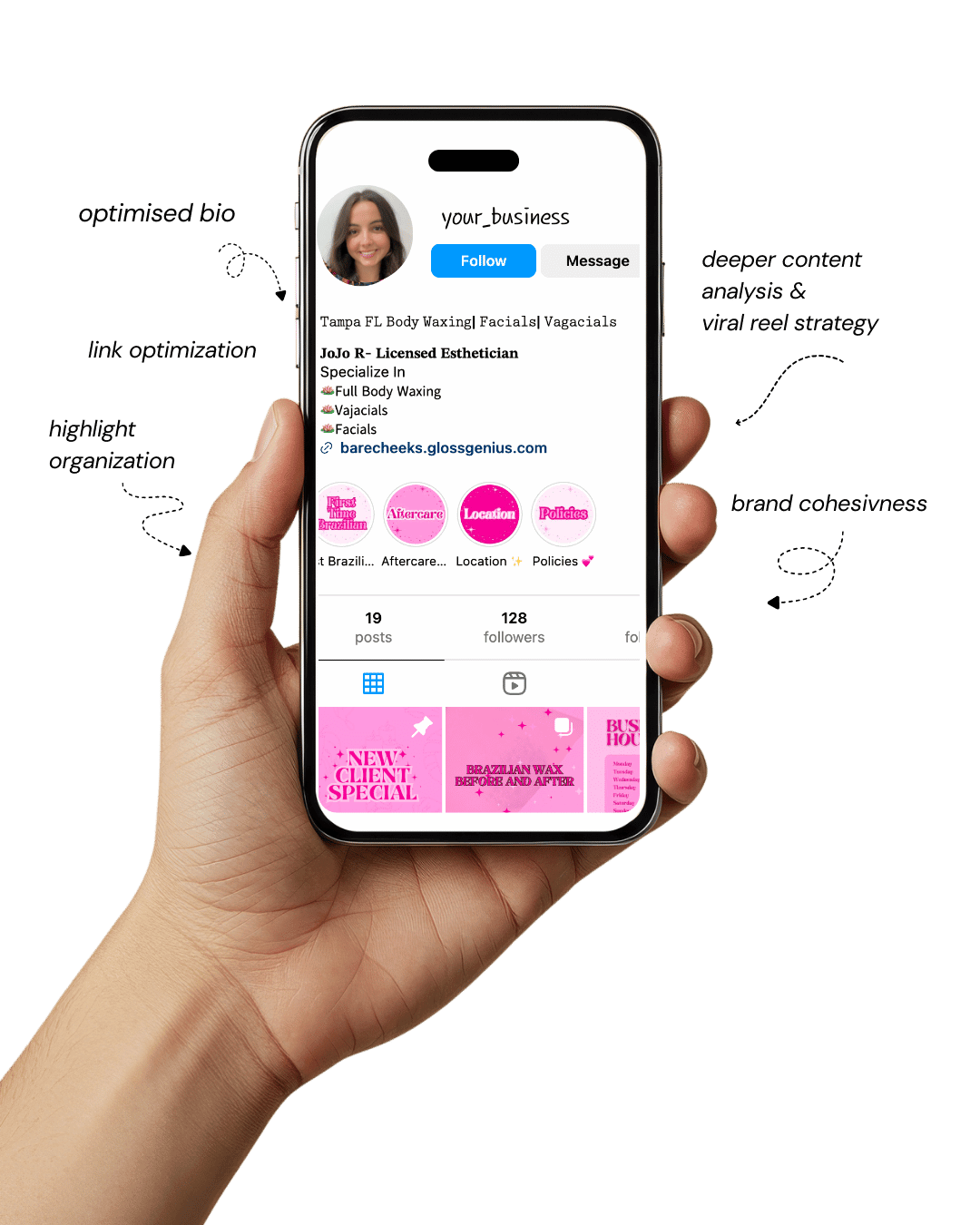
Your Instagram isn’t the problem.
The strategy is.
Get a free, honest audit of your Instagram profile — tailored for beauty, wellness & creative brands.
You’ll receive: profile fixes · content gaps · bio upgrades · content ideas.
I personally review your profile and send a clear, actionable breakdown — no AI, no templates.
Health Coaching today isn’t just about giving advice — it’s about showing people what’s possible.
In 2025, short-form content like Instagram Reels and Pinterest Idea Pins is the fastest way for Health Coaching professionals to get in front of potential clients who are hungry for simple, relatable, lifestyle-friendly solutions.
The first sentence of your content should grab attention within two seconds — because scroll behavior has changed. People look for emotional connection before information.
Using social platforms strategically allows Health Coaching to go from “I hope people find me” to “Clients are filling my calendar weekly.”
But visibility alone isn’t enough. The content must speak to problems your ideal client has today — decision fatigue around what to eat, staying motivated, building habits, stress eating, and burnout.
Your content should show a transformation, not just state it.
With the right content structure — hook, value, CTA — you can turn views into conversations and conversations into paying coaching clients.
These Reel & Pin ideas are designed for engagement, relatability, and client conversion. Each idea includes a storytelling angle, a CTA, and a technical tip most coaches miss (like retaining 70% view rate by using fast transitions).
Get ready to use these ideas to create scroll-stopping content that grows your Health Coaching business consistently.
Why Short-Form Content Is Critical for Health Coaching Growth in 2025

Short-form video is no longer “nice to have” — it’s the primary driver of organic reach.
For Health Coaching, it’s the perfect format to build trust because transformation is easier to show visually. When people see a coach’s energy, confidence, approach, and results, they connect emotionally.
Trust → curiosity → booking a discovery call.
Most coaches struggle because they post educational content, but education doesn’t always convert.
Relatability converts. Sharing problem → small win → invitation to take the next step sparks action. When content resonates, people save it, share it, and follow for more.
Technical advantages short-form gives to Health Coaching:
— Platforms push Reels/Pins to non-followers, giving built-in audience growth.
— Retention metrics matter more than views — your goal is 60% watch-through.
— Pinterest Pins rank for months (sometimes years) as search-based content.
— Instagram Reels create immediacy and DM conversations.
Short-form allows you to capture all stages of the buyer journey:
— Awareness → Consideration → Conversion.
When someone watches your content and thinks, “That’s exactly my problem,” they subconsciously elevate you from stranger to solution provider.
This is why the best Health Coaching content isn’t generic motivation — it’s relatable transformation.
1. “What I Eat in a Day (Realistic, Busy Version)”
A “What I Eat in a Day” Reel or Pin works extremely well in Health Coaching because it shows real choices instead of pushing idealized perfection.
People are tired of content that makes healthy living look glamorous but unrealistic.
Most viewers are busy, juggling work and family, and want to know what someone like them can do without spending hours meal-prepping.
The best-performing videos begin with a strong, relatable hook, such as opening the refrigerator and saying something like, “I don’t have time to cook today, so this is what a realistic healthy day looks like.”
In the first second, add text on the screen that acknowledges the viewer’s struggle, like “No time? Here’s a fast fix.”
When filming your meals, keep clips quick and dynamic. Short transitions help maintain retention, and platforms reward watch-time, which increases reach.
The goal is to show approachable nutrition through simple swaps. Instead of grabbing fast food on a busy lunch break, show how to make a ten-minute wrap at home or explain how pairing protein and healthy fats reduces cravings.
Explain why eating protein early in the day stabilizes blood sugar, normalizes hunger hormones like ghrelin, and prevents the afternoon crash.
This helps prospects see that Health Coaching is practical, not restrictive. End the video with a call to action that invites engagement, such as asking viewers to comment “MEAL PLAN” if they want the recipes or grocery list.
This shifts the viewer from passive watching to active interaction and brings them into the first stage of your Health Coaching funnel.
2. “3 Habits That Changed My Energy Levels Forever”
This idea performs well because it blends personal storytelling with transformation. Instead of just listing habits, narrate what your life looked like before adopting them.
Tell viewers you used to rely on caffeine or that mid-day crashes made you feel unproductive.
This creates emotional connection and positions you as someone who understands the problem from experience, not just textbook knowledge. Demonstrate the habits visually.
For example, film yourself drinking water before coffee to explain how hydration affects cortisol and energy.
Film a short walk after lunch while explaining the benefit of improved glucose regulation and digestion.
Then show a high-protein breakfast and explain that starting the day with carbs alone spikes blood sugar, leading to a crash later.
Make the tone conversational rather than instructional. People connect to vulnerability more than preachiness, especially in Health Coaching content.
When viewers feel like you’ve lived the struggle and solved it, they begin to imagine themselves doing the same. Add captions manually instead of relying on auto-generated captions.
Studies show that manual captions improve retention because they are visually clearer and include formatting that guides the eye. End with a clear call to action that prompts them to save and return to the video in the morning.
Repeated exposure improves memory and increases conversions for your Health Coaching programs.
3. “The Grocery Cart Template (Copy This)”
This Reel or Pin shows your viewers what to buy without overwhelming them. Most people fail before they even start because they walk into a grocery store without a plan.
Decision fatigue sets in and they revert to old habits.
Health Coaching clients constantly say, “I know what healthy means, but I don’t know how to make it happen when I’m shopping.”
By demonstrating a predictable cart template, you eliminate that barrier. Introduce the video with a hook such as, “Healthy eating starts here, not in your kitchen.”
Film yourself walking into the store, then use text to label sections like proteins, produce, healthy fats and convenience items that reduce stress on busy days.
Explain that having a template prevents impulse buying and builds nutritional balance without counting calories or macros.
Cameras and angles matter because grocery content performs well when visuals are bright and dynamic.
Film vertically for Pinterest, and ensure the store lighting or added lighting keeps the food vibrant.
Show the viewer exactly how you decide what goes into your cart. Instead of saying, “Buy protein,” explain why protein increases satiety, helps maintain lean mass, and stabilizes blood sugar throughout the day.
End with a call to action instructing viewers to message you for the printable version. This brings them directly into your Health Coaching lead pipeline.
4. Before/After Mindset Reframe
Mindset content works extremely well because it doesn’t require clients to show their bodies publicly. Instead of comparing physical results, compare mental states.
When creating this content, begin with a scenario that your ideal Health Coaching client relates to. For example, describe how they might say, “I messed up the plan today, so I’ll start again Monday.”
Then reframe it to, “One imperfect day doesn’t erase progress.” The viewer sees themselves in the struggle and feels seen and understood. Use your voice or soft trending audio that conveys calm reassurance, rather than hype.
Talk through why mindset shifts matter. Explain that long-term behavior change happens through repetition and flexibility, not perfection.
Someone who learns how to get back on track after a setback becomes resilient. Someone who chases perfection quits whenever life happens.
In Health Coaching, mindset transformation is often the breakthrough that leads to sustainable success.
Narrate the emotional shift from self-punishment to self-trust. Film yourself journaling, taking a walk, or choosing a healthy option even after a slip-up.
Let the audience see that the win isn’t perfection; the win is persistence. End with a call to action inviting them to follow for daily mindset reinforcement and encouragement.
5. Demo a 5-Minute Habit Stack
Habit stacking takes an action someone already does without effort and pairs a new habit to it. People struggle with motivation because they rely on discipline rather than systems.
For Health Coaching, this kind of content proves that change doesn’t need to be dramatic. Begin the video by saying something relatable like, “You don’t need more motivation.
You need less friction.” Show your morning routine. For example, place your supplements next to your coffee maker so your actions are automated and connected.
Explain that habit stacking relies on trigger, behavior and reward. The trigger is the coffee, the behavior is taking supplements, and the reward is improved energy throughout the day.
Film over-the-shoulder angles rather than selfie-style to create an intimate perspective. Describe why systems outperform motivation.
Motivation fades when life is stressful. Systems eliminate decision fatigue and allow habits to run on autopilot.
Connect it back to Health Coaching by explaining that success isn’t about willpower but about building small habits that eventually shape identity. The viewer leaves feeling empowered instead of overwhelmed.
End by inviting them to comment if they want your habit tracker. This encourages engagement and pulls viewers into your lead funnel for Health Coaching.
6. “Stop Doing This If You Want More Energy”
Negative framing is powerful. People scroll quickly past educational content because their brain doesn’t feel urgency.
When you begin with, “Stop doing this,” you create curiosity and pattern disruption. It forces the audience to pause. Start your video by calling out the one thing your audience is likely doing wrong.
Examples include skipping breakfast, eating low-protein meals or relying on sugar and caffeine for energy spikes.
Explain biologically why these behaviors create fatigue. When someone skips breakfast or eats a carbohydrate-only meal, their blood sugar spikes quickly and drops just as fast, causing a crash.
When someone replaces food with caffeine, cortisol rises and stress increases, leading to more cravings later.
By sharing the science in simple language, you add instant credibility to your Health Coaching content.
Film the video in a bright and clean space. Speak confidently but casually, so the tone feels attainable rather than judgmental.
Use bold text overlays to emphasize key phrases so even muted viewers understand the points.
After explaining what to stop, spend the second half of the video showing what to do instead. This balances the content by providing relief and practical solutions. Close with a strong call to action telling viewers to save the video to reference when they are tired.
Engagement improves the chance your content will reach new people and lead them into your Health Coaching funnel.
7. “Healthy Snack Pairings That Actually Keep You Full”
Many people struggle with snacking, not because they lack self-control, but because they are choosing snacks that don’t provide satiety. Explain that satiety isn’t about calories; it’s about balancing macronutrients.
Start your Reel or Pin with a hook that says, “If you snack and still feel hungry, here’s why.” Show a light carb-only snack such as crackers or fruit as an example of what leads to hunger.
Then demonstrate a balanced snack such as yogurt with berries and nuts. Narrate why the difference matters. Protein helps build lean tissue and reduce hunger.
Healthy fats slow digestion and help with vitamin absorption. Carbs offer quick energy. Together, they stabilize blood sugar and maintain energy.
Explain in plain language why someone snacks uncontrollably in the afternoon. This is where Health Coaching provides clarity and structure.
The moment viewers understand the reason behind their cravings, they feel hopeful instead of frustrated.
Show your hands preparing each snack. This makes the process feel achievable. Instead of static text, speak to the camera, showing your enthusiasm and confidence.
Invite viewers to comment with the word “SNACKS” to receive your complete snack list. This transitions them into your Health Coaching lead funnel where you can nurture them and offer deeper guidance.
8. Your ‘Why’ Story
Nothing converts higher than vulnerability. People buy from coaches they trust, and trust forms through emotional connection.
When creating this content, focus on sharing why you started Health Coaching in the first place.
Maybe you struggled with dieting for years, or maybe you learned that restriction and shame never work.
Begin the video with a personal statement such as, “I didn’t choose Health Coaching because I had it all figured out.
I chose it because I didn’t want anyone else to struggle the way I did.” Speak clearly and calmly while looking directly into the camera. Let your voice carry emotion.
Describe the moment you realized a change had to happen. Maybe it was fatigue, confusion or frustration with conflicting information online.
Explain how learning about metabolic health, balanced eating and mindset shifts transformed your life.
Make sure to frame the story around your viewer’s emotional experience, not just your own.
When people hear their struggle in your story, they see you as someone who can guide them. Conclude with an invitation.
Ask viewers to message you if they related to your journey. This creates an intimate entry point into your Health Coaching business and allows you to build genuine relationships.
9. “3 Signs You’re Under-Eating (Not Over-Eating)”
This type of content catches viewers off guard because most people assume they eat too much when they are actually eating too little.
Begin with a bold direct-to-camera statement like, “Your lack of energy isn’t because you’re overeating.
It might be because you’re under-eating.” Explain the signs clearly. Constant cravings for sugar or carbs can signal that the body is looking for quick fuel because meals lack protein.
Feeling tired or irritable throughout the day comes from inconsistent blood sugar. A weight loss plateau can signal that the body has entered a stress response due to insufficient calories.
Use clear examples to help viewers identify their patterns. Instead of saying “you under-eat,” say “if your breakfast is coffee and a banana and you crash at 2 p.m., this may be why.”
Provide a hopeful solution by explaining how balanced meals support consistent energy and metabolic health.
As a Health Coaching expert, help viewers understand that fuel leads to better decision-making, not worse. End with an invitation for them to comment “TRACKER” if they want access to a balanced plate or macro guide.
The more specific the request, the more engagement you receive, positioning you as the coach who provides clarity rather than confusion.
10. Client Story Without Photos
Many people are uncomfortable sharing before-and-after pictures, and platforms sometimes limit transformation images.
But storytelling still builds proof and trust. In this Reel or Pin, narrate a transformation using blurred screenshots of your communication with a client, such as check-in messages showing progress or excitement.
Describe who they were before working with you. Perhaps they felt stuck, overwhelmed or confused by dieting.
Then describe what changed after starting Health Coaching. Instead of focusing on numbers or weight, highlight increased energy, confidence or reduced stress around food. Explain that progress is emotional and behavioral before it becomes physical.
You can film yourself working, creating meal plans or sending messages to clients. These visuals show the coaching process in action.
When viewers watch you coaching, they begin imagining themselves in the program. The key is emotion.
Don’t say, “My client lost fifteen pounds.” Instead say, “My client told me she finally feels peaceful around food.”
This gives prospects a deeper reason to commit. End with a confident invitation telling viewers to reach out if they are ready for transformation. When people see real results through storytelling, Health Coaching becomes the solution they want.
11. Myth-Busting Carousel/Pin
Myth-busting content positions you as an authority figure. Most people are overwhelmed by contradictory health advice online.
By simplifying and correcting misinformation, you help viewers feel calmer and more confident. Start the video with text saying, “If you’ve heard this… it’s wrong,” followed by a common myth like, “Carbs at night cause weight gain.”
Then calmly explain that weight gain does not depend on the time of day but on overall calorie and nutrient patterns. Speak clearly and keep your tone neutral. You are here to educate, not argue.
Explain why myths exist. Sometimes old studies are misinterpreted. Other times, diet culture simplified concepts in a harmful way.
When your audience realizes that Health Coaching isn’t about restriction, but about understanding the body, they become curious and open to your approach. Use clean transitions and bold text so users can read it even without sound.
At the end, invite viewers to share the video with someone who still believes the myth. The more shares your content gets, the more it spreads to new potential clients.
12. Meal-Prep Without Bulk Cooking
Many people avoid meal prep because they imagine hours of cooking and dozens of containers. Show them a simpler approach where ingredients are prepped, not individual meals.
Film yourself prepping protein sources like chicken, alongside carb sources such as rice or potatoes, and assorted vegetables.
Explain that storing these ingredients separately allows for multiple combinations throughout the week and prevents boredom. Health Coaching clients love this because it gives structure without rigidity.
While filming, show the time on your phone to prove this can be done in under twenty minutes. Explain how this approach reduces stress during busy weekdays because decisions are already made. The viewer sees that small investments lead to big results.
End by inviting viewers to message you for your meal prep planning sheet, which acts as an entry into your Health Coaching funnel and positions you as someone who provides tools, not just inspiration.
13. Your Non-Negotiables
This video introduces structure. Health Coaching is attractive to people because they are tired of figuring things out alone.
When you share your daily non-negotiables, you demonstrate what it looks like to prioritize wellness consistently. Speak directly to the camera and explain that non-negotiables act as anchors for your day.
For example, say that regardless of how busy you are, you take a ten-minute walk after meals or you drink water before your morning coffee. Explain the scientific reasoning behind non-negotiables.
Walking supports glucose regulation, hydration supports digestion and energy, and avoiding screens during meals improves hunger awareness.
Show clips of yourself doing these actions to normalize them. Viewers need to see that wellness can be integrated into a busy life without sacrificing joy. Invite them to reflect on what one non-negotiable they could adopt today.
Engagement deepens their commitment and moves them closer to enrolling in Health Coaching.
14. “Dupe This smoothie/coffee order”
This idea taps into viral potential because people love dupes and hacks. Start by saying, “I love this popular drink, but here’s how I make a healthier version.” Bring the viewer with you into the grocery store or film yourself at home.
Show how to recreate the flavor, reduce sugars and add protein so the drink supports steady energy and satiety. Explain why protein helps regulate appetite and blood sugar.
People expect creativity, not perfection. By making their favorite drinks at home, you help them build habits that feel enjoyable and realistic.
This type of content positions Health Coaching as supportive rather than restrictive. The viewer learns they don’t need to quit the foods they enjoy — they just need to build them in a smarter way.
End with a call to action inviting viewers to save the video for their next grocery trip.
15. A Motivational Pep Talk
This content works because it speaks directly to the viewer’s emotional struggle. Start with a statement that interrupts negative self-talk, such as, “You don’t need to start over.
You need to keep going.” Look directly into the camera. Let your tone be calm and firm.
Explain that progress isn’t about motivation; progress comes from showing up even on days when motivation is low. Tell them that change happens from small consistent actions, not drastic efforts.
Remind viewers that Health Coaching isn’t about perfection. It’s about building habits that keep them anchored when life becomes chaotic.
Your message should validate their feelings while challenging their excuses. Viewers feel encouraged, seen and supported. End by inviting them to send the video to someone else who needs to hear it.
This encourages shares, boosts reach and connects your emotional messaging with future Health Coaching conversions.
Steps to Further Improve Results & Convert Followers to Clients

Posting great content is only the first step. Without a conversion system, followers remain silent observers. Every Reel or Pin should lead viewers toward a next action.
In Health Coaching, conversions begin when you guide viewers from passive scrolling to active conversation. The first step is using a clear keyword-based call to action.
Ask them to comment a word that triggers a follow-up message where you deliver something valuable, such as a meal prep guide or snack list. Once someone interacts, continue the conversation through direct messages. People convert in private.
Create a weekly rhythm for your content so your messaging stays consistent. Share content that solves problems, content that demonstrates proof and content that creates emotional connection.
Track saves and shares. Saves indicate someone will apply the information, and shares introduce you to new potential Health Coaching clients. Lastly, batch-create your videos.
Film multiple clips in one session and edit them later. Editing should take time because you want clips short, captions clear and hooks strong.
When you pair storytelling with systems, your content becomes a steady pipeline of clients for Health Coaching.
Final Words
If you’ve ever felt invisible online, these content ideas will change everything. People don’t hire the best coach — they hire the coach they feel connected to.
By using storytelling, relatability, and strong CTAs, your Reels and Pins become a bridge between interest and action.
Short-form content is the most powerful tool for growing your Health Coaching business in 2025 because it meets people where they are: scrolling for solutions.
Use your content to spark small wins, build belief, and show what’s possible.
Your next client isn’t waiting for another perfect post — they’re waiting for a moment where they see themselves in your message. Go share it.