
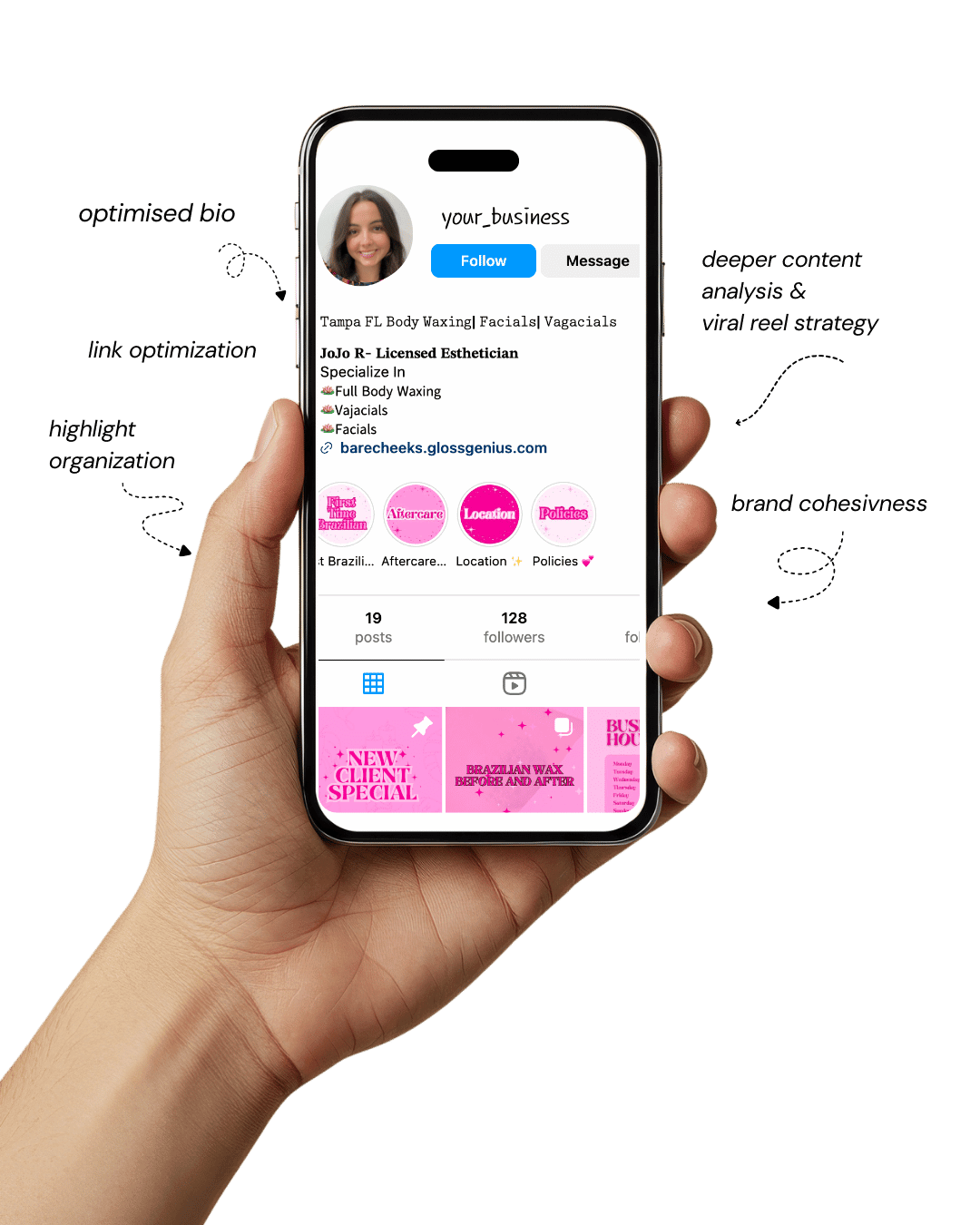
Your Instagram isn’t the problem.
The strategy is.
Get a free, honest audit of your Instagram profile — tailored for beauty, wellness & creative brands.
You’ll receive: profile fixes · content gaps · bio upgrades · content ideas.
I personally review your profile and send a clear, actionable breakdown — no AI, no templates.
A smooth client onboarding process can set the tone for your entire coaching relationship. The very first interaction after someone signs up is where trust is either strengthened or weakened.
Many coaches assume onboarding starts after payment, but in reality, the client onboarding process begins the moment a prospect says “yes” and commits to working with you.
When onboarding is done intentionally, clients instantly feel supported, cared for, and confident that they made the right investment.
A strategic client onboarding process allows you to eliminate confusion, reduce miscommunication, and save hours of back-and-forth messaging.
Instead of scrambling every time you sign a new client, you’ll know exactly what to say, what to send, and how to move them into the next stage.
When your onboarding is systemized, your brand feels more professional, your clients engage faster, and you create a consistent experience that leads to better results and more referrals.
Many coaches worry that automation will feel cold, but the opposite is true. When done right, automation frees up your time so you can show up more personally in sessions.
A streamlined client onboarding process proves to your clients that they’re in capable hands — and that builds long-term loyalty.
Why a Streamlined Client Onboarding Process Is Essential

A streamlined client onboarding process is more than paperwork and welcome emails. It is the foundation of your coaching relationship.
When you deliver a well-organized onboarding experience, you reduce anxiety and create clarity. Clients join coaching programs full of hope, but also with questions and uncertainty.
Your onboarding shouldn’t add to that confusion — it should remove it.
A clear and thoughtful onboarding structure also improves accountability and engagement. When clients understand how the workflow operates, when their sessions are scheduled, and which resources they will receive, they begin your program feeling empowered rather than overwhelmed.
This directly influences their results. A study from the Journal of Relationship Marketing found that a structured onboarding process increases client retention by more than 60%.
That’s because people stay where they feel supported and guided.
Another benefit is time efficiency. When your client onboarding process uses tools like automated emails, digital scheduling, and pre-set forms, you eliminate unnecessary manual work.
The time you save can be invested back into your coaching — not admin. Coaches who streamline onboarding often experience faster results and higher referrals because their clients feel cared for right from the start.
A great onboarding experience becomes part of your brand reputation.
1. Immediate Confirmation Message
The first and most critical step in your client onboarding process is sending an immediate confirmation message the moment payment is made. This message acts as a psychological bridge.
Right after someone invests in coaching, their emotions are at a high point — excitement mixed with nervousness. If silence follows, the emotional high quickly turns into fear, doubt, or buyer’s remorse.
A fast confirmation removes every negative thought. It reassures them that their payment processed correctly and that they are officially in.
Instead of letting them wonder what happens next, automate a system where the confirmation message is triggered instantly.
The message should clearly state that their enrollment is complete, acknowledge their decision, and briefly outline what will follow.
A well-written confirmation message does not need to be long. It simply must make the client feel seen and secure.
The goal is to convert uncertainty into trust by responding faster than they expect. Use a CRM or payment tool that supports automation so this becomes part of your consistent client onboarding process.
When done correctly, this moment triggers relief. Relief is the emotional state where trust is built.
A fast confirmation tells your client that you operate with efficiency and attention to detail, and it sets the standard for the coaching relationship moving forward.
2. Send a Personalized Welcome Email
After the initial confirmation, the next part of the client onboarding process is sending a warm and personalized welcome email. While the confirmation message confirms their enrollment, the welcome email deepens connection.
This is where you shift from transactional to relational. It should feel like an invitation into a partnership, not a template.
Address them by name, reference the specific program or package they purchased, and express genuine excitement about working together.
Personalization increases emotional connection and reduces the distance between “coach and client.”
This welcome email should also function as their central hub of information. Instead of overwhelming them with lengthy instructions, organize the email clearly so they can easily scan it.
Add the most important links, login details if there is a portal, and a clear statement of what they need to do next.
If your client onboarding process involves multiple steps, let them know the order right here so they never wonder what comes next.
When your welcome message is clear and thoughtful, the client feels valued and understood. A sloppy welcome email creates confusion and makes the client feel like they have to chase you for information.
A polished welcome email conveys professionalism and tells them, “You made the right decision, and here is what we’re doing together next.”
3. Deliver an Onboarding Form
Once the warm introduction is complete, deliver an onboarding form. This step in the client onboarding process helps you gather essential information before your first session begins. Instead of wasting coaching time collecting details verbally, the form gives structure.
It tells you who your client is, what they want, and how you can best support them. More importantly, it helps your client reflect on their goals.
The onboarding form gives them a moment to articulate their desires in writing. When someone writes down a goal, their brain begins committing to it. They become more emotionally invested in seeing the coaching process through.
Ask questions that matter—goals, challenges, expectations, and how they prefer communication and feedback.
This information helps you personalize your coaching experience and immediately positions you as a coach who pays attention.
Use streamlined tools such as Google Forms or Typeform. They keep everything neat and prevent information from getting lost in your inbox.
When a client completes the form, you gain insight into where they are mentally and emotionally. You can walk into your first session already prepared and informed.
This is the moment your client realizes that they are not just another name in your system. They are a priority.
4. Send Your Contract for Digital Signature
Contracts are not about distrust — they are about clarity. Sending a digital contract during the client onboarding process eliminates ambiguity and outlines responsibilities on both sides. Coaching is an emotional investment, and clarity creates safety.
Your contract should clearly define what is included, how payment works, how communication will happen, and what happens if either party needs to reschedule or adjust timelines. When expectations are defined upfront, there is no room for misunderstanding.
Using tools like DocuSign, HelloSign, or HoneyBook simplifies the entire process. Digital contracts can be signed from a phone, tablet, or laptop, removing the friction of printing and scanning.
Clients appreciate a streamlined system because it proves that you value their time and your own. The more professional and automated your system is, the more confidence they feel in your coaching.
The contract also protects your time and energy. Without defined boundaries, coaching relationships can become confusing.
Clients might expect instant replies, unlimited availability, or deliverables outside of what was agreed.
A signed contract keeps the working relationship clean and healthy. It communicates, without needing excess explanation, that your time and expertise are valuable.
The client onboarding process becomes easier when the expectations are documented and mutually agreed on before any coaching begins.
5. Provide Access to Your Client Portal or Resource Hub
Once the contract is signed, grant access to a centralized portal. This portion of the client onboarding process allows your client to feel in control and supported.
A client portal acts as a home base where all resources, session notes, replays, documents, and templates are stored.
It keeps everything in one place so your client never has to ask, “Where do I find this?” When your systems are organized, your client feels safe.
Whether you use Notion, Kajabi, Google Drive, HoneyBook, or a private membership platform, the goal is the same: simplify the flow. The portal should feel intentional, not cluttered. Each section should serve a purpose.
A well-structured portal also reduces the number of emails you receive because clients can help themselves without waiting for your response. When clients access their materials independently, they feel empowered and engaged.
This type of digital organization improves your brand reputation. Clients naturally assume that coaches who operate with structure run their programs with equal care.
A thoughtful client portal tells your client that they are investing in more than conversations — they are stepping into a structured development experience.
The portal is one of the strongest components of a seamless client onboarding process because it reinforces your leadership and enhances client accountability.
6. Schedule Their First Call
Once clients have their portal access, move them into scheduling. This moment inside the client onboarding process reinforces momentum. If too much time passes between signup and the first session, motivation weakens.
People begin doubting themselves or procrastinating. When you make the first interaction easy to schedule, your clients feel that the process is moving forward.
Use an automated scheduling tool such as Calendly, Acuity, or Motion. These platforms detect time zones automatically, eliminate back-and-forth messaging, and send calendar invitations with reminders.
Automation reduces no-shows and prevents confusion. When the client sees the appointment on their calendar, the coaching relationship shifts from theoretical to real.
Scheduling early also begins training your client to show up for themselves. They become more committed when the session date is set rather than floating in possibility.
This step ensures that the excitement they felt when investing transitions into action. The client onboarding process isn’t just about logistics — it’s about the emotional psychology of momentum.
By guiding clients into immediate scheduling, you shorten the gap between investment and action, and that gap is where doubts disappear and confidence grows.
7. Send a Pre-Call Prep Outline
The pre-call outline is one of the most overlooked steps in the client onboarding process, yet it is one of the most powerful. Before the first session, let the client know exactly what will happen during the call.
This simple structure reduces anxiety and prepares them mentally for the experience. When clients feel prepared, they show up more present and more open.
Your outline should clarify what the first session will focus on. For example, if you normally start with goal-setting, future vision, or reviewing their onboarding form, let them know.
When clients know what to expect, they don’t waste mental energy wondering if they are doing something wrong. Clarity relaxes the nervous system. A relaxed client absorbs more coaching and performs better.
The outline should also include what they need to bring or prepare ahead of time. For some coaches, this might be as simple as reviewing their onboarding answers. For others, it may involve sending materials or completing a pre-session assignment.
A structured pre-call step shows professionalism and reinforces accountability. Clients love knowing that their coach is organized and intentional.
A consistent pre-call outline elevates your client onboarding process because it transforms the first session into a productive, focused experience, not a loose conversation without direction.
8. Share Your Communication Guidelines
Communication guidelines protect both you and your client. This step in the client onboarding process creates emotionally healthy boundaries.
When communication expectations are unclear, clients may assume you are available around the clock. Misunderstandings create frustration on both sides. Instead, lay out how communication works early.
Let them know where communication should happen. If you use Voxer, email, or a client portal message system, make that clear. Outline your response time so they know when to expect replies.
It is not rude to have boundaries; it is professional. In fact, boundaries increase trust because they prove that you operate with intention and balance.
Clarify that the coaching relationship is transformational, not transactional. You guide, but the client executes.
Communication guidelines help eliminate dependency and empower clients to take ownership of their progress.
Without boundaries, clients may treat coaching like outsourced execution rather than supported transformation.
The client onboarding process becomes smoother when communication is defined. You establish trust by being transparent and consistent.
When clients have clarity, they relax into the coaching experience instead of overthinking how or when to reach out. Strong communication expectations make the coaching partnership healthier for everyone.
9. Deliver a Quick Win Before Session #1
This is where excitement meets implementation. A quick win is something actionable, small, and immediately beneficial. It should not overwhelm the client, but it should create transformation.
This step in the client onboarding process builds confidence early.
When someone sees results quickly, they become more committed to the coaching journey. It proves that change is possible.
A quick win could be a simple exercise, a short training, or a reflection prompt—anything that shifts their mindset.
This builds a sense of progress before your first session even begins. It also deepens their emotional investment.
When clients achieve momentum early, they are more engaged, more motivated, and more coachable.
The quick win positions you as a coach who delivers value fast, not after weeks of setup. It also helps eliminate buyer’s remorse.
When someone gets a tangible result, even a small one, they feel validated in their investment.
The client onboarding process becomes more powerful when clients experience results instead of waiting for them.
A fast win tells your client that this program will work because it already has.
10. Personal Check-In Message
The final step of the client onboarding process is a personal check-in. It is simple, but it creates emotional connection.
After all forms are submitted, contracts are signed, the portal is accessed, and the first call is scheduled, reach out personally.
This message can be short. The purpose is not information — it is connection. Let them know you’re excited and ask how they are feeling.
This personal touch brings humanity back into a system that could otherwise feel automated.
It shows that you are not just a coach who cares about structure — you care about people. Clients do not remember the automation; they remember how you made them feel.
This check-in demonstrates presence. It tells your client that you are not only organized but attentive. The best client onboarding process ends with emotional grounding.
When the client feels seen and supported before the first session even begins, the coaching relationship enters a higher level of trust.
Connection is the foundation of transformation.
Additional Steps to Improve Your Client Onboarding

To elevate your client onboarding process even further, build automation into key checkpoints. Automate your welcome email sequence so clients receive instructions instantly without needing you to manually respond.
Create templates for common responses to save time while still sounding personal. Automate calendar reminders to reduce no-shows.
Most coaches try to handle these tasks manually, which leads to inconsistency. When everything is automated, you free up energy to show up more intentionally for your clients.
Another way to improve your client onboarding process is to track touchpoints. Write out every step — from sign-up to session — and identify where clients tend to slow down or get confused.
If clients consistently miss a step, adjust the workflow or provide clearer instructions.
Finally, always request feedback after onboarding. Ask what part felt confusing or overwhelming so you can refine it. A streamlined onboarding process isn’t static — it evolves with every client.
Final Words
A refined client onboarding process doesn’t just make your business more efficient — it elevates the entire client experience.
When clients feel guided and supported from the moment they sign up, they show up differently. They trust faster, engage deeper, and take action sooner.
Instead of rushing to deliver coaching, give equal attention to how clients enter your world. The smoother the entry, the stronger the transformation.
Your onboarding is part of your brand, your reputation, and your long-term retention strategy.
A professional onboarding process doesn’t need to be complicated — just intentional, consistent, and client-centered.