
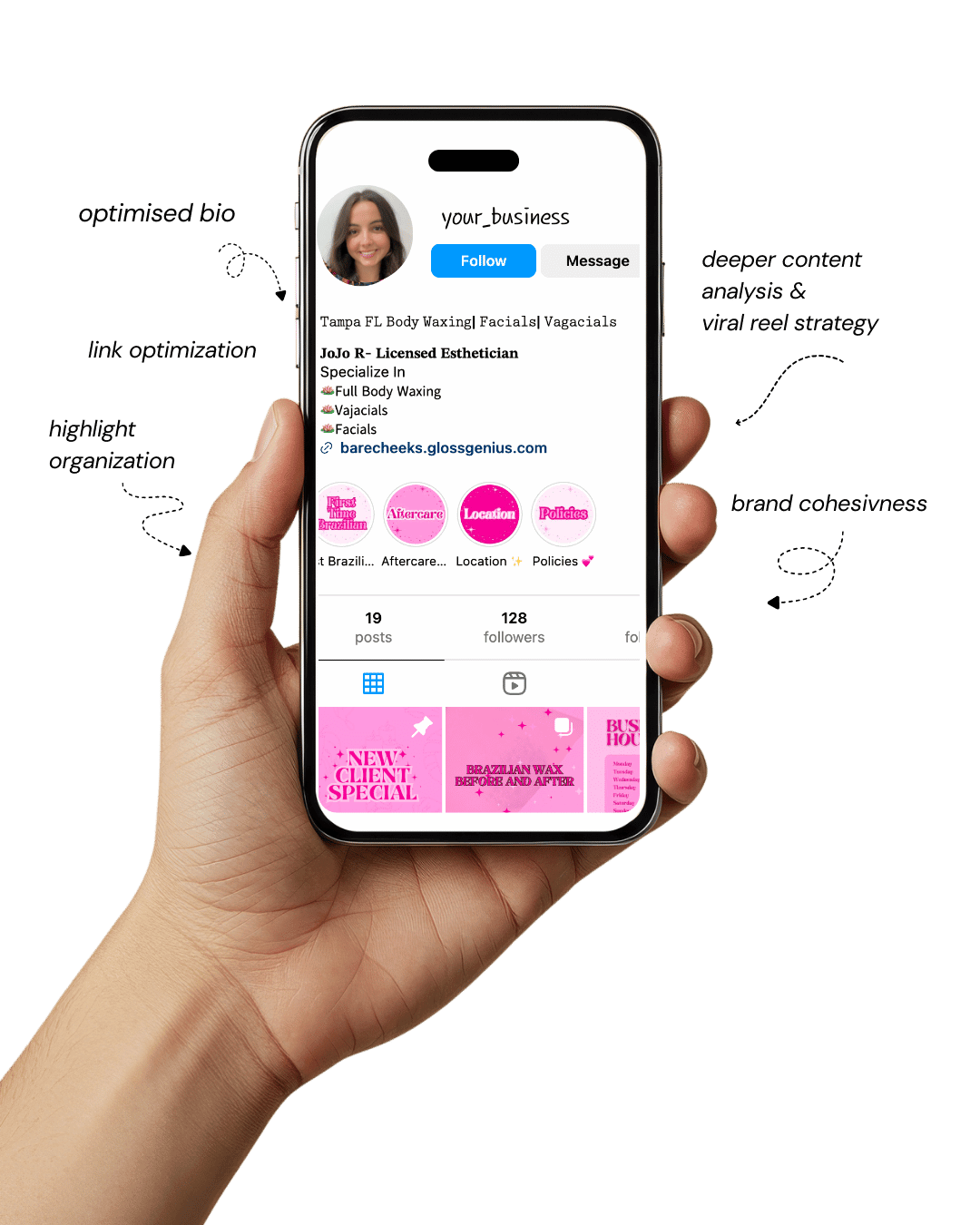
Your Instagram isn’t the problem.
The strategy is.
Get a free, honest audit of your Instagram profile — tailored for beauty, wellness & creative brands.
You’ll receive: profile fixes · content gaps · bio upgrades · content ideas.
I personally review your profile and send a clear, actionable breakdown — no AI, no templates.
When you’re growing your coaching business, strong coaching branding ideas can make or break your credibility.
You could be the most talented coach in your niche, but if your brand looks inconsistent or outdated, potential clients might scroll right past you. The truth? People buy with their eyes first — especially online.
Branding isn’t just about having a cute logo or matching Instagram colors; it’s about creating a cohesive brand experience that feels trustworthy, premium, and aligned with your message.
Whether you’re a life coach, business coach, or mindset mentor, the right visual and verbal cues tell your audience that you’re professional, confident, and worth investing in.
In this guide, we’ll explore 22 practical coaching branding ideas that can help you stand out, attract the right clients, and position yourself as a true expert.
These aren’t fluffy tips — they’re actionable tweaks you can implement today, even if you’re DIY-ing your brand in Canva.
From color psychology to voice consistency, every tweak will take your brand from “good” to “gorgeous and growth-ready.”
By the end, you’ll know exactly how to refine your brand identity so your business looks as powerful and polished as the transformation you promise your clients.
Why Branding Matters for Coaches

If you’ve ever wondered why some coaches seem to magnetize clients effortlessly, it usually comes down to branding clarity.
Good branding does more than make your business look pretty — it creates trust before you ever speak to a client.
Your brand acts as your visual reputation. When done right, it conveys authority, confidence, and alignment with your audience’s values.
A strong brand tells potential clients: “This coach knows what she’s doing.” On the other hand, inconsistent visuals, mismatched fonts, or unclear messaging can confuse or repel your ideal audience.
From a psychological perspective, branding triggers recognition and recall. For instance, a consistent color palette increases brand recognition by up to 80%.
That’s why one of the smartest coaching branding ideas is maintaining visual uniformity across your website, social media, and materials.
For female entrepreneurs especially, branding is empowerment — it allows you to express your voice and values while building a business that feels authentically you.
When your brand looks professional, clients perceive your services as premium and trustworthy. The result? Higher conversions, better client retention, and a brand presence that grows effortlessly.
1. Define Your Core Brand Message
Your brand message is the cornerstone of your entire identity. It’s what tells the world who you serve, how you help, and why your work matters. Before you even think about your logo or colors, you need clarity here.
Think of it as your north star — the clear statement that guides every visual and verbal choice you make.
Your message should communicate your mission so clearly that even a stranger scrolling past your profile can instantly understand your purpose.
When defining your brand message, focus on what transformation you create for your clients. For instance, instead of saying “I’m a life coach,” you might say “I help women rebuild confidence and direction after career burnout.”
That statement tells your audience exactly who you serve and what they can expect.
Keep your message emotionally resonant, concise, and easy to remember. Once it’s clear, use it everywhere — your website headline, Instagram bio, and email signature.
When people can instantly “get you,” you’ve achieved one of the most important goals of professional branding.
2. Craft a Professional Logo That Reflects Your Niche
Your logo isn’t just a decorative mark; it’s a visual expression of your brand’s identity. It should reflect your niche and your audience’s expectations.
A leadership coach might choose a strong, structured font to communicate authority, while a wellness coach might use softer shapes and organic lines to evoke calmness and trust.
Even if you’re creating your logo in Canva, focus on balance, readability, and scalability. Your logo should look crisp on both a tiny Instagram icon and a large banner.
Avoid overcomplicating it — simplicity often creates the most memorable impression.
Save your logo in both transparent PNG and vector formats (SVG or EPS) so you can use it on any medium without distortion.
A professional-looking logo immediately sets the tone for your brand. It tells potential clients that you take your business seriously, and that sense of professionalism can significantly impact their willingness to invest in your coaching services.
3. Choose a Consistent Color Palette
Color is one of the most powerful non-verbal communication tools in branding. Before a word is read, color sets the emotional tone.
Blue evokes trust, pink conveys empathy and warmth, gold reflects luxury and success, and green signals growth and balance.
When choosing your brand colors, select three to five complementary shades that best represent your brand’s personality.
Consistency in color usage across your website, social media, and printed materials creates instant recognition.
A cohesive palette also makes your visuals look intentional rather than random. Make sure to document your chosen colors with their exact HEX or RGB codes so you can reproduce them accurately across different platforms.
This level of detail may seem small, but it’s what makes your brand feel professional and polished.
When clients see your posts or materials, they should instantly associate that color scheme with your business — that’s the power of a well-executed color identity and one of the most valuable coaching branding ideas you can apply.
4. Use Branded Fonts
Typography has its own language. It can whisper elegance, shout authority, or express approachability — all without saying a word.
Choosing the right fonts is about aligning your typeface personality with your coaching message.
A serif font such as Playfair Display feels classic and trustworthy, while a clean sans-serif font like Poppins or Lato feels fresh and modern.
Limiting yourself to one font for headlines and one for body text helps maintain clarity and visual rhythm. Overusing different fonts can make your materials look chaotic and inconsistent.
If you use Canva or website builders like Squarespace or Showit, upload your selected fonts to ensure brand consistency everywhere.
Even subtle elements such as letter spacing, line height, and boldness can affect readability and emotional tone. When used intentionally, fonts can become a silent ambassador for your brand.
5. Create a Visual Mood Board
A mood board acts as the visual DNA of your brand. It’s a curated collection of colors, textures, imagery, and tones that collectively communicate your aesthetic vision.
Before you start designing anything, take time to define how you want people to feel when they interact with your brand.
You can create a digital mood board on Pinterest or Canva that captures your desired vibe — whether it’s minimalist and elegant, warm and feminine, or bold and empowering.
Collect visuals that represent your ideal client’s world, along with the lifestyle and emotions your brand embodies.
This single resource becomes your visual compass. Whenever you create new content or update your website, refer back to your mood board to ensure consistency.
It keeps your branding decisions aligned with your original vision and helps you avoid visual confusion down the road.
6. Invest in Professional Photography
Photography is one of the most overlooked yet transformative aspects of coaching branding. Authentic, high-quality imagery immediately elevates your perceived value.
While stock photos can work for filler visuals, nothing builds trust like real photos of you in action.
Plan a brand photoshoot that captures your essence — candid shots of you coaching, journaling, smiling, or simply being in your element.
Coordinate your outfits with your brand colors, and choose natural light to ensure warmth and authenticity.
Ask your photographer to capture both wide and close-up angles, as these variations will help you use images across different marketing materials.
Before uploading, compress your images using tools like TinyPNG to maintain speed without sacrificing quality.
Professional images not only enhance your visual credibility but also create a personal connection that clients can feel immediately.
7. Design a Cohesive Website
Your website is often your audience’s first real experience of your coaching brand. It should feel cohesive, inviting, and aligned with your personality.
A well-designed site builds trust, while a poorly structured one can lose potential clients in seconds.
Focus on simple navigation, fast loading speeds, and responsive design. Make sure your visuals, fonts, and messaging align seamlessly with your social media identity.
Use professional images, embed testimonials, and clearly present your call-to-action buttons — such as booking a session or downloading a free resource.
Think of your website as your digital home. Every page should reinforce your brand promise, from your About page to your blog posts.
Consistency creates comfort, and comfort builds trust — a vital ingredient in successful coaching branding ideas.
8. Optimize Your Social Media Presence
Social media is where your brand personality shines daily. Your profiles should instantly tell visitors who you are and what transformation you offer.
Keep your profile pictures, banners, and post designs consistent with your brand visuals.
Using Canva templates saves time and ensures uniformity. Curate your Instagram grid or LinkedIn posts to reflect your brand energy — consistent colors, fonts, and voice create instant recognition.
Regularly refresh your bios to include your core message and keywords like “coaching branding ideas” to help your profile appear in relevant searches.
Social media is also your opportunity to connect emotionally. Speak directly to your audience, share stories, and show behind-the-scenes glimpses.
The more human your brand feels, the stronger the connection becomes.
9. Develop a Brand Voice Guide
Your voice is as much a part of your brand as your visuals. It’s the personality your audience hears when they read your posts or emails.
Ask yourself: do you want your voice to sound nurturing and calm, or bold and motivating? Whatever you choose, consistency is key.
Document your tone, vocabulary, and rhythm in a simple brand voice guide. Identify the emotions you want to evoke and the kind of language that best reflects your style.
Keep it authentic to who you are — your voice should feel like a natural extension of your personality, not a forced marketing persona.
Once you’ve defined your voice, apply it across all content. Every caption, email, and blog post should feel like it’s written by the same person.
This builds trust and familiarity, both essential in turning followers into clients.
10. Design a Branded Email Signature
Every email you send is part of your brand experience. A professional email signature makes even casual communication feel intentional.
Include your name, title, logo, and links to your website or social platforms, all in your brand colors.
A clean, consistent email signature doesn’t just look good — it reinforces your credibility subconsciously with every correspondence.
If you’re using Gmail or Outlook, you can easily create a clickable HTML signature that drives traffic to your offers or booking page.
Small details like this communicate organization, professionalism, and attention to detail — qualities clients appreciate in a coach.
11. Use On-Brand Canva Templates
Templates are a secret weapon for time-strapped coaches who want to look polished consistently.
Customize templates to match your brand colors, fonts, and layout style.
Once you have a library of branded designs for social posts, ebooks, and client materials, maintaining consistency becomes effortless.
These templates ensure your visuals always feel cohesive, even on busy weeks.
Consistency in presentation subtly communicates reliability and professionalism, both essential for coaches looking to stand out online.
12. Create a Style Guide
A brand style guide is your design rulebook — the document that keeps your visuals consistent, whether you’re creating them yourself or outsourcing. Include logo variations, font usage, color codes, and photography guidelines.
Having a style guide ensures every new piece of content aligns with your identity. It’s particularly useful when your team grows or when you hire designers, as it keeps your brand visuals cohesive across all platforms.
This is one of those technical but powerful coaching branding ideas that separates amateur-looking businesses from established brands.
13. Establish a Signature Tagline
Your tagline distills your brand’s essence into one memorable phrase. It’s the line that clients remember and associate with you. Keep it concise, emotional, and benefit-driven.
A strong tagline captures both the transformation you offer and the emotion behind it — something like “Empowering women to lead with purpose.”
Place your tagline strategically across your digital assets — on your homepage, email footer, and social bios. Repetition builds recognition.
Over time, it becomes a verbal logo that anchors your brand identity in your audience’s minds.
14. Incorporate Client Testimonials Visually
Testimonials are proof of transformation, and the way you display them matters. Instead of hiding them in text-heavy pages, present them visually. Create branded quote graphics in Canva that feature your brand colors and fonts.
Adding your client’s first name and photo (with permission) increases authenticity. These graphics can be shared on social media, in your email newsletters, or on your website.
Visual testimonials not only enhance credibility but also add an engaging design element that aligns beautifully with your branding.
15. Brand Your Client Documents
Your brand should extend into every part of the client experience — including the documents you send. Your welcome guides, coaching contracts, workbooks, and worksheets should all reflect your visual identity.
Use your fonts, colors, and logo throughout. Design headers and footers that feel consistent with your website aesthetic.
This attention to detail creates a seamless experience from the first inquiry to the last session. Clients notice when every touchpoint feels intentional — and that consistency builds loyalty.
16. Optimize Your Brand Photography for Web Use
Even high-quality images lose their value if they slow down your site. Before uploading photos, compress them using optimization tools to ensure your pages load quickly.
Slow websites not only frustrate visitors but also harm your SEO performance.
When saving your photos, rename each file descriptively, such as “confidence-coach-brand-photo.jpg.”
This improves search visibility for key terms like “coaching branding ideas” while keeping your backend organized.
Adding alternative text (alt text) for each image boosts accessibility and helps search engines understand your content contextually.
17. Create Highlight Covers on Instagram
Instagram highlights act as the organized shelves of your brand story. Branded highlight covers make your profile appear polished and intentional.
Choose minimalist icons that match your brand’s visual tone, and use your color palette for backgrounds.
Label your highlights clearly — for example, “Testimonials,” “Tips,” or “Behind the Scenes.”
When someone visits your profile, a neat and cohesive highlight section gives them an instant sense of your professionalism and attention to detail.
18. Leverage Consistent Hashtags and Keywords
Consistency doesn’t stop with visuals — it extends to discoverability. Using strategic hashtags like #CoachingBranding, #FemaleEntrepreneur, and #BusinessTips helps you appear in relevant searches.
Pair that with consistent use of your primary keyword “coaching branding ideas” in your bio, captions, and website copy to improve SEO performance.
This consistency not only boosts your visibility but also strengthens your brand association with your niche. Over time, your audience begins to connect your name with your area of expertise automatically.
19. Create a Branded Lead Magnet
A well-designed lead magnet, such as a free guide or workbook, can attract new clients while reinforcing your credibility. The trick is to ensure it looks and feels just like your brand — same colors, fonts, and tone.
For example, a “Mini Brand Clarity Workbook” designed in Canva can double as a freebie and a branding showcase.
When your free resources look professional, they communicate the quality of your paid offerings. This small but powerful detail often converts curious leads into paying clients.
20. Add Branded Icons and Graphics
Icons may seem minor, but they make content easier to navigate and visually appealing. Choose one consistent icon style for your website and marketing materials — whether minimalist line icons or filled shapes.
Using the same icon style across your visuals reinforces brand harmony. It’s one of those subtle cues that make your brand feel clean, intentional, and professional.
21. Refresh Your Brand Every 12 Months
Branding should evolve as your business grows. Set aside time each year to review your visuals, messaging, and tone. Ask yourself whether your current brand still represents who you are and who you serve.
Sometimes, refreshing your color palette, updating typography, or refining your website layout can breathe new life into your entire business.
Keep your updates strategic — evolution, not reinvention, maintains brand recognition while keeping things current.
22. Audit Your Brand Regularly
Professional brands don’t just look polished once; they stay that way through consistency and regular evaluation.
Every few months, take a close look at your entire digital presence — your website, social media, and client materials.
Ask yourself whether everything still aligns with your message and visuals. Check for inconsistencies in tone, colors, or formatting.
These small misalignments can dilute your brand’s impact over time. A quarterly brand audit ensures your presence remains cohesive, credible, and reflective of your professional growth.
Other Steps to Elevate Your Branding Results

Once you’ve implemented these coaching branding ideas, it’s time to take it a step further. Branding isn’t a one-time project; it’s an evolving process that grows with your business.
1. Get Feedback from Your Audience
Survey clients or followers about how they perceive your brand. You might uncover gaps between what you think you’re communicating and what’s actually being received.
2. Invest in Professional Design Tools
Upgrade to Canva Pro or Adobe Express. These platforms let you store brand kits, fonts, and templates — making your visuals consistent even on a busy day.
3. Study Competitor Branding
Look at what works in your niche. Identify patterns that attract engagement, then adapt them while staying authentic to your voice.
4. Monitor Analytics
Track your website bounce rate, social engagement, and click-throughs. Branding success can be measured through improved conversions and visibility.
The secret? Consistency plus clarity equals recognition. The more cohesive your brand, the easier it is for people to trust and choose you.
Final Words
Your brand is more than a logo — it’s the story your audience tells about you when you’re not in the room.
These coaching branding ideas are your roadmap to building a professional, polished presence that reflects your expertise and passion.
You don’t need a big budget to look credible; you just need clarity, consistency, and the willingness to refine.
Each tweak — from your colors to your client materials — compounds to create a seamless experience that feels intentional and inspiring.
Remember: people don’t invest in coaching, they invest in coaches they trust. And a well-branded business earns that trust before a word is spoken.
So, start refining today, stay consistent, and let your brand reflect the transformation you deliver every day.