
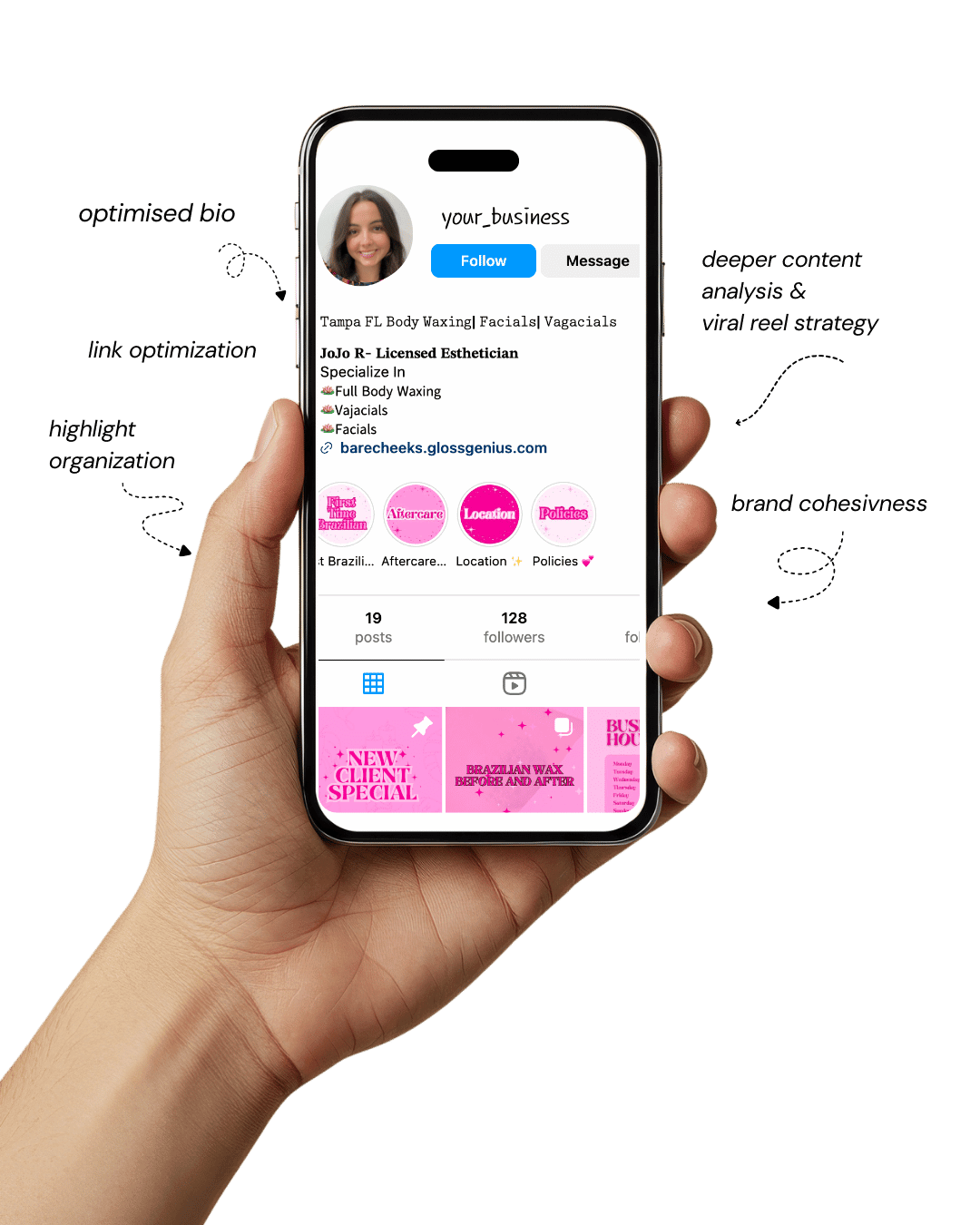
Your Instagram isn’t the problem.
The strategy is.
Get a free, honest audit of your Instagram profile — tailored for beauty, wellness & creative brands.
You’ll receive: profile fixes · content gaps · bio upgrades · content ideas.
I personally review your profile and send a clear, actionable breakdown — no AI, no templates.
When it comes to marketing your coaching business, knowing how to communicate your value is everything. That’s where content pillars for coaches come in.
They act as the backbone of your content strategy — helping you stay consistent, relevant, and memorable across every platform.
Whether you’re a life coach, business coach, fitness coach, or mindset coach, strong content pillars turn your random posts into a clear brand story that connects with your audience.
Instead of constantly wondering what to post next, you’ll have a structured system that saves time, builds authority, and attracts the right clients.
Each piece of content you share becomes part of a cohesive marketing narrative that reinforces your expertise and builds trust.
By the end of this article, you’ll have some of the most powerful content pillars for coaches that you can start using immediately.
We’ll also look into a few optimization strategies to help your posts perform better — on social media, blogs, and even email campaigns.
Think of this as your complete roadmap to creating consistent, high-impact content that attracts attention and converts interest into loyal clients.
Why Content Pillars Matter for Coaches

If you’ve ever felt stuck trying to come up with content ideas, you’re not alone. Coaches often have incredible insights but struggle to translate them into consistent marketing.
That’s exactly why having clear content pillars for coaches is so important.
Content pillars give structure to your brand story. They help you organize your ideas into key themes that resonate with your audience and align with your coaching goals.
Instead of posting random motivational quotes or sporadic tips, you’ll build a predictable, trustworthy rhythm that positions you as a thought leader.
From an SEO perspective, content pillars make your strategy more discoverable.
They allow search engines to understand your area of expertise, improving your ranking for niche topics like “confidence coaching,” “leadership development,” or “wellness transformation.”
Most importantly, when clients see consistent, purposeful content, they perceive you as dependable — which is critical in coaching.
Trust doesn’t happen overnight; it’s built through regular, high-value interactions. And these pillars ensure every post, email, or article moves your audience closer to a coaching conversation.
1. Your Personal Story and Journey
Every coaching brand begins with a story — and yours is the foundation of everything. When you share your personal journey, you invite your audience to see the person behind the brand.
This kind of storytelling is one of the most powerful content pillars for coaches because people connect with people, not logos or taglines.
Your story should answer three questions:
- What led you to become a coach?
- What challenges did you overcome along the way?
- How did those experiences shape your approach to helping others?
Be specific. Instead of saying “I wanted to help people,” describe a defining moment — perhaps the career burnout that made you pivot, or the mentorship that changed your perspective.
Include your transformation arc: where you started, what you struggled with, and how your methods evolved from your lived experience.
This isn’t about oversharing — it’s about intentional vulnerability. When readers see that your systems are born from experience, they perceive your coaching as authentic, grounded, and trustworthy.
That emotional resonance is what turns casual followers into loyal clients.
2. Client Success Stories
Nothing proves your effectiveness like real results. Highlighting client success stories — through testimonials, video interviews, or written case studies — is a cornerstone of building credibility.
These stories go beyond praise; they demonstrate transformation in action.
Structure your case studies with clarity:
The challenge: What problem did your client face before working with you?
The process: What coaching approach, framework, or tools did you use?
The result: What measurable change occurred?
For example: “After 3 months of productivity coaching, Sarah reduced her workweek from 70 hours to 45 while increasing her revenue by 30%.” Concrete outcomes like this are persuasive because they illustrate tangible value.
You can also share anonymized stories for confidentiality — just focus on the transformation. Incorporate visuals (like progress charts or short testimonial videos) to increase engagement.
Client stories act as proof that your system isn’t just theory — it’s results-driven and repeatable.
3. Educational How-To Guides
One of the most strategic content pillars for coaches is the educational “how-to.” These posts help you demonstrate expertise while giving your audience immediate, actionable value.
They position you as a teacher rather than just a motivator.
For instance, if you’re a mindset coach, you could create guides like:
“How to Reframe Negative Thoughts in 3 Simple Steps”
“A Daily Routine for Building Confidence and Consistency”
Focus on simplicity and clarity. Use lists, frameworks, and mini exercises.
The goal is to create micro-transformations that make readers think, “If I got this much value for free, imagine what paid coaching could do.”
From a technical standpoint, how-to guides are SEO gold. They naturally incorporate long-tail keywords, increase dwell time, and attract search traffic from people actively seeking solutions.
Always include a CTA (call to action) leading to your services or a lead magnet.
4. Myth-Busting and Common Mistakes
The coaching industry is filled with misinformation, and this pillar helps you stand out as a voice of clarity. By addressing misconceptions, you establish yourself as a critical thinker who brings nuance to popular topics.
For example:
“Why Motivation Alone Won’t Help You Reach Your Goals”
“The Mistake Most New Coaches Make When Building Their Brand”
When debunking myths, back your statements with evidence — cite studies, mention proven methodologies, or share your professional experiences that contradict common assumptions.
This reinforces authority while keeping your content intellectually credible.
This pillar also performs well on social media because it challenges beliefs and sparks discussion — which boosts engagement and organic reach.
In essence, you’re educating your audience by reshaping their perspective.
5. Behind-the-Scenes Insights
People love seeing the “human side” of a coach. Sharing behind-the-scenes glimpses makes your brand feel approachable and real.
This could include your daily routine, how you prep for a session, or even how you design new programs.
You might post a short video showing your workspace setup or a carousel explaining how you structure your coaching packages.
These small insights make you relatable and transparent — which builds trust far faster than polished, corporate-looking content.
Technical tip: On platforms like Instagram or LinkedIn, behind-the-scenes content often has a higher engagement rate because it fosters emotional connection and authenticity.
It breaks the wall between “expert” and “audience,” making you feel like a partner in their growth rather than an untouchable authority figure.
6. Mindset and Motivation Posts
Inspirational content is vital — but it needs depth to stand out. Instead of recycling quotes, use them as conversation starters.
For instance, share a quote about resilience, then discuss a personal story that exemplifies that idea.
This makes your motivational posts more reflective and personal. Talk about the moments when you almost gave up, what helped you push through, and how that experience shaped your coaching philosophy.
These stories show empathy and emotional intelligence — two qualities clients deeply value in a coach.
To optimize, create “mini blog posts” on social media where you blend inspiration with insight. The algorithm tends to reward meaningful, comment-provoking content over short quotes.
Plus, it gives followers a glimpse into your mindset — making your brand feel genuine, not generic.
7. Tools, Frameworks, and Systems You Use
Coaching thrives on structure, and sharing your signature systems is one of the strongest content pillars for coaches. Frameworks make your methods tangible and help clients visualize how transformation happens.
For example, you might introduce your “3C Framework for Confidence: Clarity, Consistency, and Courage,” or explain how you use tools like Trello, Notion, or journaling templates to guide sessions.
When you reveal parts of your system, you communicate professionalism and credibility.
Don’t be afraid to give away the framework — the value isn’t in the information itself but in how you apply it. Show how these systems integrate into your process and what results they enable.
Adding branded visuals or downloadable templates can make this content even more shareable and lead-generating.
8. Niche Expertise Deep Dives
Your niche defines your authority. Deep dives let you go beyond surface-level content and explore your area of expertise in depth.
For instance, if you’re a leadership coach, you could write about “Emotional Agility in Executive Teams” or “How Cognitive Bias Impacts Decision-Making.”
This type of content attracts high-intent clients who are already seeking specialized help. From an SEO perspective, it’s incredibly effective.
Use specific long-tail keywords like “executive burnout recovery coaching” or “wellness coaching for entrepreneurs.”
Deep-dive articles, podcasts, or videos also give you material to repurpose — you can extract key points into reels, carousels, or email newsletters.
It’s content that works hard across multiple platforms while positioning you as the go-to expert in your space.
9. Frequently Asked Questions (FAQs)
FAQs make your brand accessible. Answering recurring questions publicly saves you time and reduces friction for potential clients. Think of it as preemptive coaching — addressing doubts before they become objections.
Some strong FAQ examples include:
“How Long Does Coaching Take to Show Results?”
“What’s the Difference Between Coaching and Therapy?”
“Do I Need to Have Goals Before I Start Coaching?”
Each response should combine empathy with clarity. Use storytelling when appropriate — for instance, “One of my clients asked this exact question before starting…” This makes the answers relatable and human.
From an SEO angle, FAQs improve visibility because Google often displays them in featured snippets.
Adding a dedicated FAQ page to your website or turning them into a video Q&A series can significantly increase your online reach.
10. Industry Trends and Research
Staying current with data-driven insights positions you as a serious professional. Reference credible sources like ICF, Harvard Business Review, or psychology journals.
Discuss emerging coaching models, AI-assisted accountability tools, or changes in client behavior trends.
For example, “How the Rise of Remote Work Is Shaping the Coaching Industry” or “What Neuroscience Tells Us About Habit Formation.”
Adding statistics or citing new research differentiates you from surface-level motivators.
This pillar also helps with thought leadership. When you analyze trends, you contribute to the larger professional conversation — and that’s how media outlets, podcasts, or conferences find you.
It shows that your coaching practice evolves with the industry.
11. Visual Storytelling and Infographics
Visual content bridges understanding. People retain 65% more information when it’s paired with visuals — making infographics and visual storytelling key assets for coaches.
Create flowcharts explaining processes like “The Cycle of Self-Sabotage” or “Steps to Building Lasting Habits.”
Use Canva or Figma to design visuals that align with your brand colors and fonts. Consistency builds recognition.
You can also repurpose text-based posts into slides or carousel graphics for LinkedIn and Instagram.
The technical rule here: keep your font size large enough for mobile viewing, and include 1 idea per slide for readability. These posts are easy to share, boosting reach and authority simultaneously.
12. Live Sessions, Webinars, and Replays
Live content brings your coaching energy to life. Hosting webinars, live Q&As, or group coaching previews allows prospects to experience your style firsthand.
Share snippets, highlight key takeaways, or post replays for those who couldn’t attend. Use subtitles for accessibility and to improve watch time (as 80% of users watch videos without sound).
You can even automate replays with email funnels — converting one-time events into evergreen lead magnets.
This pillar doesn’t just showcase expertise; it creates intimacy. Seeing you coach in real time builds instant trust and familiarity, which can fast-track the decision-making process.
13. Collaboration and Networking Highlights
Your credibility grows through connection. Collaborations with other coaches, podcasters, or thought leaders help you tap into new audiences while reinforcing your professional image.
Post about guest appearances, interviews, or co-hosted workshops. Tag collaborators to cross-promote content and strengthen algorithmic visibility.
Technically, LinkedIn and Instagram prioritize content with mentions and tags — meaning these posts tend to get higher organic reach.
Moreover, these collaborations show that you’re part of a larger community, not working in isolation — which appeals to clients who value coaches with diverse perspectives.
14. Personal Growth and Learning
Your growth journey never ends — and showing that publicly keeps your brand relatable. Talk about the books you’re reading, the certifications you’re pursuing, or the new strategies you’re testing.
You could post, “5 Lessons I Learned from My Recent Leadership Training” or “Why I Revisited My Own Mindset Work.” This transparency tells your audience that even experts stay teachable.
From a branding perspective, this positions you as a lifelong learner — an essential trait in a coach. It also gives followers permission to evolve alongside you, creating a sense of shared growth and community.
15. Offers, Programs, and Calls to Action
Finally, your content should guide people toward working with you. This pillar is all about conversion — turning engagement into enrollment.
When promoting your services, focus on the transformation, not just the features. Instead of saying “6-week coaching program,” say, “A 6-week journey to uncover clarity, confidence, and a concrete action plan for your goals.”
Keep the message client-centered: What will they gain? How will their life look after the process? Include social proof, testimonials, and a direct CTA — such as “Book a free clarity call” or “Join the next cohort.”
For best results, integrate subtle CTAs in your educational and storytelling posts too. Consistent but soft promotion ensures your audience always knows how to take the next step without feeling sold to.
Steps to Improve Your Content Results

Now that you know the top content pillars for coaches, it’s time to maximize their impact. Start by repurposing — one idea can become a post, a blog, an email, and a video.
Next, track your metrics. Use tools like Meta Insights, Google Analytics, or Notion dashboards to see which pillars perform best.
Batch-create content around your highest-performing pillars. Then, automate scheduling with tools like Later or Metricool.
Keep an eye on engagement — the goal isn’t just likes but meaningful interactions that signal trust.
Experiment with short-form video and carousels; both outperform static posts right now. And don’t forget SEO optimization: include your target keyword in your titles, meta descriptions, and alt text.
Finally, audit your content every quarter. Remove outdated posts, update data, and align your tone with current trends. This consistent improvement process keeps your marketing sharp and your brand growing.
Final Words
Building a strong brand online isn’t about posting more — it’s about posting with purpose.
The right content pillars for coaches help you share consistent, impactful messages that resonate with your audience and attract ideal clients.
When you structure your content around these core pillars, you’ll never run out of ideas again.
Each piece of content becomes a stepping stone that leads prospects closer to trusting you — and eventually hiring you.
Remember: great content doesn’t just promote; it educates, inspires, and connects.
So, choose your pillars wisely, measure what works, and refine as you grow. Your content isn’t just marketing — it’s your legacy as a coach.