
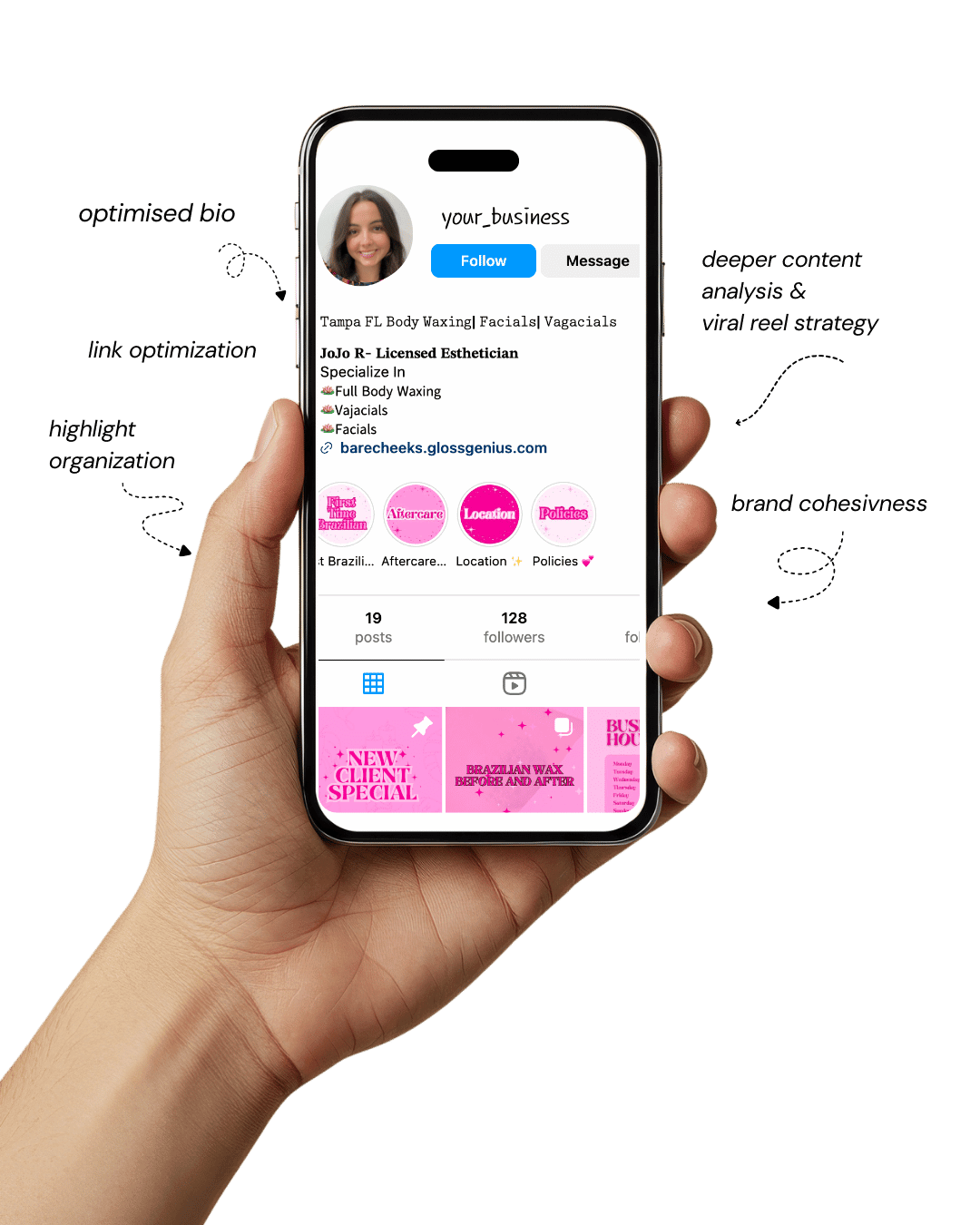
Your Instagram isn’t the problem.
The strategy is.
Get a free, honest audit of your Instagram profile — tailored for beauty, wellness & creative brands.
You’ll receive: profile fixes · content gaps · bio upgrades · content ideas.
I personally review your profile and send a clear, actionable breakdown — no AI, no templates.
When you’re a life coach, the right resources can make all the difference. A good life coach template library allows you to spend less time on logistics and branding, and more time doing what you do best: guiding others.
In this article we’ll dig into why having ready-to-use templates matters, and we’ll walk you through 20 specific templates designed for coaches just like you.
Whether you’re a mindset coach, wellness coach or personal development guide, you’ll find ideas here that simplify your workflow, polish your brand, and help you deliver consistent value. Let’s dive in.
Why Ready-Made Templates Matter for a Life Coach

Templates are more than just convenience — they’re a productivity lever. As a life coach, your time is one of your most valuable assets.
When you use a set of well-designed, customizable templates, you minimize repetition, avoid reinventing the wheel for each session, and ensure a consistent brand experience for clients.
Good templates also help you present professionally: clean layout, purposeful design, and the right messaging mean clients immediately recognise your value.
Plus, because a lot of coaching involves follow-up, documentation, and visual branding, a framework of templates keeps you organised and aligned.
What’s more, when you spend fewer hours on admin and graphics, you can focus more on the actual coaching — the heart of your business.
That means more client transformation, better referrals, and a more sustainable practice.
1. Introductory Client Onboarding Pack
Every professional life coach knows the client relationship begins long before the first call. The onboarding pack ensures that experience feels seamless and organized.
This template bundle typically includes a personalized welcome letter, a detailed intake form, a coaching agreement, and a structured first-session outline.
The welcome letter introduces your brand voice and sets expectations — include a short overview of your coaching philosophy and how clients can make the most of your sessions.
The intake form should go beyond basic demographics; ask questions about motivation, long-term vision, past coaching experiences, and preferred communication methods.
A crucial yet often overlooked field is technology readiness — noting the client’s preferred video platform, time zone, and internet stability prevents unnecessary disruptions.
The coaching agreement outlines confidentiality, payment terms, cancellation policies, and communication boundaries — key for professionalism and trust.
Lastly, the first-session outline keeps you and your client aligned from the start, ensuring goals are set with clarity and enthusiasm. This pack saves hours each month while building a foundation of structure and confidence.
2. Goal-Setting Worksheet
A well-structured goal-setting worksheet is the heartbeat of every life coach’s toolkit. It transforms vague desires into actionable outcomes.
Using the SMART method (Specific, Measurable, Achievable, Relevant, Time-bound), this template guides your client from broad aspirations to crystal-clear milestones.
Include a progress tracker table with date stamps, color-coded completion indicators, and a notes column for reflection.
A priority matrix (urgent vs. important) helps clients decide where to focus first.
Pro coaches also integrate visual progress bars that update automatically — especially powerful in digital templates using Google Sheets or Notion.
Technical enhancement: link each goal to its related life domain (e.g., career, wellness, mindset). This helps measure balance and prevents overcommitment in one area.
Over time, clients begin to see progress not just in goals achieved, but in overall personal alignment—exactly what great life coaching strives for.
3. Session Agenda Template
Without structure, even the best coaching calls can drift. This template ensures every minute is purposeful.
Divide it into five key segments: review of previous action steps, focus topic, insight exploration, new commitments, and session wrap-up.
Add a time-tracking column beside each segment — vital for maintaining session boundaries and demonstrating respect for your client’s time.
Another professional touch: include a “Breakthrough Moments” section to capture key realizations in real time.
To streamline, many life coaches link their session agenda directly to their CRM or calendar app. This way, notes sync automatically, and follow-ups are easier to manage.
The result? Sessions that flow smoothly, end with clarity, and always deliver value.
4. Homework & Accountability Tracker
Action is the bridge between coaching and transformation. This tracker template provides a structured way to assign tasks, track deadlines, and record progress.
Each row should include: the task description, due date, completion checkbox, and coach comments.
A game-changing addition is the self-rating scale (1–10) for confidence and commitment. This simple metric reveals your client’s internal resistance before it becomes procrastination.
Add a “Reflection” column where clients share what they learned from each task—helping you gauge depth of growth, not just completion.
For digital life coaches, link this tracker to shared cloud files so both coach and client can update asynchronously.
Automation tools like Zapier can even trigger reminder emails before due dates, saving you countless follow-ups.
5. Monthly Reflection Journal
Growth happens in reflection, not just action. The monthly journal template allows both client and life coach to pause, evaluate, and realign.
It includes open-ended prompts such as:
“What surprised me most this month?”
“Which habits helped me the most?”
“Where did I self-sabotage?”
“What’s one thing I’m grateful for?”
Add a mood tracker graph or emotional wheel to visualize trends over time. Technical upgrade: integrate the journal with your CRM so entries automatically generate summary notes under each client’s profile.
This not only saves hours of admin work but creates data you can use to personalize future sessions.
6. Branding Social-Media Pack for Coaches
In today’s digital space, brand presence matters as much as coaching skill. This Canva-ready pack helps a life coach project consistency and professionalism across all platforms.
The set includes templates for quotes, client testimonials, tips, carousel posts, and story highlights. To elevate your content, embed your brand color codes, fonts, and logo variations directly in the design file.
Include specific sizes: Instagram posts (1080×1080px), reels (1080×1920px), and LinkedIn banners (1584×396px).
Optimize all designs for mobile-first viewing and maintain visual hierarchy for readability. A well-branded feed builds trust and authority instantly — before a single word is read.
7. Email Newsletter Template
An email newsletter remains one of the most valuable assets for a life coach. This template is structured for engagement: a captivating subject line, a warm introduction, a client story, a valuable insight, and a strong call-to-action.
Keep design clean and responsive for both desktop and mobile users. Include alt-text on images (boosts accessibility and deliverability) and maintain consistent header formatting.
Advanced touch: connect the newsletter to your CRM analytics so you can track open rates, click-throughs, and engagement patterns.
With data in hand, you’ll know exactly what resonates—and save time by focusing on what works.
8. Webinar or Workshop Promo Kit
If your coaching strategy includes live workshops, this promotional kit is a time-saver. It includes templates for landing pages, email invitations, registration forms, reminder emails, and post-event thank-you slides.
Each template should emphasize clear benefit-driven copy — what transformation participants can expect.
Include placeholders for embed codes from your registration platform and GDPR-compliant consent checkboxes for EU/UK clients.
For visual consistency, align your event slides with your brand style guide and record templates so you can reuse them in future workshops.
A consistent format means you spend less time designing and more time delivering value.
9. Slide Deck Template for Coaching Sessions
A visual presentation often enhances understanding, especially for conceptual or mindset-based sessions. This slide deck template ensures professional polish and flow.
Start with a title slide (session theme and client name), then include agenda slides, visuals, frameworks, and reflection prompts.
Maintain consistent master slides with your logo, font, and color palette embedded.
Turn off automatic animations to keep transitions clean and distraction-free. Always use widescreen (16:9) format for modern displays and online platforms.
Include a notes section for each slide where you can write cues or discussion points, making your sessions both structured and spontaneous.
10. Testimonial Collection Form
Social proof is marketing gold for any life coach. This ready-to-send form automates the process of collecting meaningful testimonials.
The form should include:
A few reflection prompts (What did you enjoy most? What changed for you?)
Rating scales for satisfaction and results
Fields for client name, photo, and consent for public sharing
To stay legally compliant, add a digital consent clause granting permission to publish the testimonial on your website, social media, and print materials.
Once gathered, testimonials can be auto-imported into your social post templates, keeping your brand credible and consistent.
11. Client Exit Survey & Feedback Form
Post-program reviews are a goldmine for improvement. This form helps a life coach measure impact and satisfaction.
Include both qualitative and quantitative fields—rating overall satisfaction, clarity of sessions, and perceived ROI. Ask clients to identify the single most valuable insight they gained.
Add a Net Promoter Score (NPS) question: “On a scale of 0–10, how likely are you to recommend this coaching program to others?”
Tracking NPS monthly reveals trends in satisfaction and potential referral strength. The insights gathered inform marketing, refine service delivery, and enhance client retention strategies.
12. Pricing & Service Menu Template
Clarity breeds confidence. A beautifully designed pricing and service menu presents your offers clearly and professionally.
Each section should describe the package, deliverables, time commitment, and pricing in easy-to-scan bullet points.
Include a “Book Now” or “Schedule Consultation” button (if interactive PDF or webpage) to streamline conversion.
For advanced credibility, integrate testimonials beside each package and mention who it’s ideal for (e.g., executives, creatives, entrepreneurs).
Using visually consistent design elements reinforces your identity as a polished, trustworthy life coach.
13. Referral Programme Flyer
Word-of-mouth marketing still reigns supreme in coaching. This flyer template motivates clients to refer others by outlining your referral reward system.
Design both digital (RGB) and print (CMYK) versions. Include space for program rules, referral links, expiration dates, and clear reward descriptions.
Pro tip: Include a QR code that leads directly to your booking page. With this, clients can share your services effortlessly — and your referral funnel becomes automated and measurable.
14. Monthly Content Planner for Coaches
Content consistency is a non-negotiable for online visibility. This planner helps a life coach stay organized without burnout.
It includes a month-view calendar, post type dropdown (reel, blog, story, newsletter), theme suggestions, and a “Repurpose” column to track multi-platform use.
Add a hashtag vault tailored to your niche (e.g., #MindsetCoach #PersonalDevelopment). Technical upgrade: integrate with scheduling tools like Later or Metricool for automatic posting.
You’ll cut content prep time in half and maintain a steady online rhythm.
15. Client Progress Dashboard
Data-backed progress builds credibility and motivation. This template provides a visual summary of each client’s transformation.
Columns include baseline metrics, current status, goal percentage achieved, and commentary. Add automatic charts or graphs that display improvement over time.
To enhance accuracy, link this sheet with your client’s accountability tracker and reflection journal. That integration creates a holistic overview of growth — an invaluable asset during review sessions and testimonials.
16. Coaching Session Summary Email Template
Post-session summaries create accountability and momentum. This email template outlines key insights, next actions, and resource links.
Include placeholders for:
Date/time of next session
Top three takeaways
Action plan recap
Optional reading or video links
Add a toggle field marked “Urgent Follow-Up Required” so you can prioritise clients needing extra support.
Automate these summaries using your CRM so they’re sent within an hour of each session — professional and efficient.
17. Challenge Week Template
Challenges are one of the best ways for a life coach to build engagement. This 5- or 7-day challenge template simplifies everything — emails, social prompts, resource links, and discussion topics.
It also includes a participant tracker to monitor engagement and a conversion metric dashboard to see how many challengers become paying clients.
Add automated reminders for each day of the challenge and a “completion certificate” template for those who finish. It builds connection, satisfaction, and conversion simultaneously.
18. Brand Style Guide for Coaching Business
Your brand identity should feel as aligned as your coaching message. This guide ensures your visuals and tone stay cohesive.
Include your logo usage rules, font pairings, HEX codes, and Pantone values.
Add example visuals showing approved photo styles, iconography, and brand voice descriptors (e.g., “calm,” “empowering,” “growth-oriented”).
Technical detail: provide exact dimensions for profile images, banners, and thumbnails for each major platform. This saves endless resizing time and ensures your presentation always looks polished.
19. Resource Library Catalogue Template
Over time, coaches accumulate valuable worksheets, eBooks, audios, and checklists. This catalogue organizes them for easy access.
Each item includes: title, short description, link, client use suggestion, and version control (date updated). Versioning is often missed but vital — it helps track changes and ensures clients always download the correct file.
Include search and filter functions by topic or program. For larger coaching businesses, this template can integrate with Notion or Airtable to create a full-scale resource portal.
20. Annual Business Review & Planning Template
Finally, a life coach also needs self-reflection. This annual review template lets you evaluate both personal and business performance.
It includes sections for financial data (revenue, expenses, profit margin), client count, program ROI, and marketing analytics.
Then, pivot to strategy — next year’s goals, product innovations, and potential collaborations.
Add formulas for automatic ROI calculation and charts for quick visualization. Include a risk analysis segment listing challenges faced and mitigation strategies.
By documenting insights yearly, you’ll evolve your practice intentionally and sustainably.
Additional Steps to Improve Results as a Life Coach

Once you’ve adopted these templates, you can further boost your impact by taking a few extra steps.
First, automate what you can — link your templates to tools like email automation, CRM platforms, file-hosting solutions so manual work becomes minimal.
Second, customise them to your unique voice and niche. The templates provide structure, but your authenticity is what truly resonates with clients.
Third, review and iterate — set time every quarter to update your templates based on feedback, changing branding or market shifts.
Fourth, train your assistant or team on the use of these templates so your business can scale without sacrificing quality.
Finally, measure the outcome — track how much time you save, how many clients convert after a challenge, how many referrals come through.
This data helps you refine your process and invest in what works most.
Final Words

A strong set of templates is a game-changer for any life coach. By leveraging these carefully crafted resources, you’ll save time, present yourself professionally, and create a smoother experience for your clients.
You’ll free yourself from repetitive tasks and get back to what you’re passionate about: facilitating transformation.
So pick the templates that feel right for you, embed them into your workflows, and watch how your coaching practice becomes more efficient, impactful and scalable. Here’s to your next level as a life coach!